Showing posts with label my dad's a dick. Show all posts

Monday, April 4, 2022

Thor: the Dark World or “Loki: the Loki-ing”

 Well, I don’t know if anyone is reading this, but like I said, no one would take me seriously if I made another flounce, so here I am. Again, Utopia Defined will be a long time coming, due to the amount of research required.

So Thor: the Dark World (TDW) aka the hot mess of the MCU. I suppose you could make a case that its predecessor, Iron Man 3, was a hot mess, but while it was in places, there were also some genuinely compelling elements like Tony’s PTSD. Whereas TDW is just a hot mess. 

To the extent anyone remembers anything about TDW, they remember Loki. Hence my alternate title. That mothereffer effectively stole every scene he was in, put in the bank and drew interest, making sure to invest his earnings in an offshore tax shelter so the IRS can’t get their hands on it. Tom Hiddleston is just terrific, clearly having a fabulous time with this part. 

I remain disappointed that no one answered my Tom Hiddleston vs. Benedict Cumberbatch question.

Anyway, if this review is kind of skimpy, well, it’s because outside of Loki, there’s nothing really memorable about this movie. It’s not as completely unmemorable as The Incredible Hulk but that’s not much of an accomplishment.

Following his attempt to conquer Earth, Loki has been packed off to an Asgardian prison. And Odin, being the kind of guy he is, wastes no time when it comes to being a dick. Yeah, Odin, real mystery why Loki has issues, what with the whole treating him as a political hostage rather than, y’know, your child. It’s understandable why the fangirls woobify Loki so much and while I don’t judge them too harshly for it, me, I much prefer my Loki to have something of an amoral streak.

As for what Thor’s been up to, well, after the Battle of New York, he decides to meet up with Natalie Portman.

He’s a muscle-bound Demi-god and she’s an ethereally beautiful nerd. I have no idea how their relationship works; I just know that Natalie Portman causes me to question my commitment to heterosexuality whereas Chris Hemsworth causes me to want to renew my commitment to heterosexuality, making me wonder if having them play a couple, isn’t the equivalent of putting a humidifier and dehumidifier side by side and letting them battle it out.

Let us never forget that the Four Chris Debate has been effectively resolved.


Reposting image because no one read my previous Thor post, and I’m petty as heck.

But Jane has her own issues right now.

Basically, Jane Foster has some red energy inside her that makes gravity and everything else behave wonky. So Thor brings her home to Asgard.

Ah, Odin hardly wastes any time when it comes to being a dick. Like I said before, with the sheer amount of dickish dads in the Marvel-verse (Odin, Howard Stark, Hank Pym, Harold Barton, Brian Banner, occasionally Joseph Rogers), it makes me wonder if anyone ever asked Stan Lee or Jack Kirby to show on a doll what the bad man did to them. The DC-verse probably has their share of dickish dads, but it doesn’t seem quite as extensive as Marvel, where nearly every Avenger can wear a “My Dad’s a Dick!” shirt.

I wonder if this has something to do with the differing approaches Marvel and DC take to their heroes. DC has long held its heroes as aspirational figures, people to aspire towards. I’m not saying that DC Comics’ characters are completely lacking in flaws or compelling drama but that’s the approach they take.

Whereas Marvel has long gone for a more grounded approach, showing its characters as people struggling to deal not only with the great responsibilities placed on their broad shoulders, but also ordinary stuff like trying to pay the bills.

Note, I didn’t use the world “realistic” when talking about Marvel, because while defenders of Marvel will claim that their characters are more realistic, really, there’s almost nothing realistic about superheroes. Superheroes are inherently a romanticization, modern day tales of the knight-errant as Linkara puts it in one of his best speeches.

And given, as I assert in my opening “Utopia Defined” post, we live in a stunted reality, I am more in favor of romanticization. 

Still the differing approaches Marvel and DC take to their characters can be utilized in compelling ways as seen in the Kurt Busiek and George Perez JLA/Avengers crossover, where initially the Avengers are appalled by all the massive statues of JLA members, believing that they force the populace to worship them as gods. And moments like when Aquaman argues with Doctor Doom about governing a population. 

And just in case you don’t trust my word regarding said crossover, you better believe I’ll post Linkara’s review just so you can see some of it for yourself. Part One, and Part Two.

Unfortunately, the comic itself is unavailable in trade, probably due to copyright issues, so the only way you can read this fabulous work of art, is to buy used comics, which costs mucho dinero. 

On an unrelated note,  I have a Ko-Fi. If you want to drop some bucks in my cup as thanks, feel free.

Anyway, back to the movie.

But someone else is interested in the red stuff inside Natalie Portman. Meet Malekith the Accursed

And I don’t know if anyone has been participating in the debate over which Marvel villain qualifies as Zero (as in there is nothing, nothing remotely memorable about them), but for those who guessed Malekith, come on down and collect your prize, which amounts to bragging rights.

Because there is nothing remotely memorable about Malekith. He woodenly walks through this movie never demonstrating anything resembling a personality, barely displaying the stereotypical “I’m a villain and I’m having a ball” traits seen in superhero villains.

There is no sense of life behind the character, even though superhero villains are traditionally the scenery chewers, the over-the-top grandiosity a defining trait. Granted, MCU villains (with the exception of Loki) are generally boring and bland until Phase Three, but even other Phase One and Two villains demonstrate occasional signs of life, but not Malekith.

In fairness, given how charismatic Loki is, maybe there was no chance for Malekith to be livelier than cold gravy. Malekith is played by Christopher Eccleston who played the ninth incarnation of The Doctor. Being a Baby Whovian who has only seen the 13th Doctor* and a handful of other episodes and having never seen any 9th Doctor episodes, I can’t give any comments about his performance, whether his version of The Doctor demonstrates any charisma or wit. But he certainly doesn’t demonstrate any charisma or wit in TDW. 

Granted TDW is desperately underwritten and Malekith is even more so, and there’s only so much that even a good actor can do to save a bad part. Eccleston has almost nothing to work with, so I don’t hold this film against him.**

Probably no scene better illustrates the desperately underwritten nature of this movie, that this moment: The Death of Frigga


 I put this picture up for a reason; fear not, there is a method to my madness. There are a wide variety of tests regarding female characters, The Bechdel being the most famous. To this list, I want to add another one to the pile.


Thor’s Mum rule – If you’re going to kill a character who’s carried any part of the plot, take a bit to reimagine the plot as if she were the main character, and the story ends when she dies.  If it’s unsatisfying, rewrite either her plot points, or her death, to make both more meaningful.

Frigga's death is a classic "woman in the refrigerator" moment, her death serving more to cause the men in her life Man-Pain. Oh sure, the movie puts forth some effort to go "Be sad! Be sad at this moment!" but Frigga has mattered so little that there's no way her death could have any impact. The only reason it has any impact is due not to the writing, but Tom Hiddleston and Rene Russo got together and basically decided that Loki and Frigga would share a close bond.


So yeah, for those of you who haven't figured out the common pattern of the three cut scenes from the first Thor movie, the common thread is Frigga. Putting these scenes in the movie wouldn't completely alleviate all the problems with her character, but they would give her death more of an impact, especially the one where she says that Odin should have told Loki the truth. Regarding this movie, this scene with her should have gone into the final project as well. Granted, really the whole part needs to be rewritten, but I'm thinking from a more practical standpoint: what can we do with what exists, rather than try to re-direct a whole film. 

I will admit that the death scene we did get is better than the alternate version where Frigga is even more unceremoniously dispatched and Odin, once again, is a colossal dick. 

Anyway, there is really nothing left for me to talk about this movie. I know all of you are getting tired of me using the word "underwritten" when it comes to this movie, but really, it's the best way of summing it up. 

The only real lasting plot points that come to play in later movies is Loki fakes his death yet again and is now ruling Asgard, disguised as Odin. 


 Image posted because it is so damn true. The one time Odin displays any fatherly warmth is when Loki is pretending to be him. While I know that there are more likely reasons, my personal headcanon is that was how Thor eventually figures out. At some point between TDW and Ragnarok, Thor's like, "Wait a minute, my father was being much less of a dick than usual..." 

tl;dr, this movie is only worth it for Loki. I've heard some theorize that maybe this was his plan all along to wind up in prison so he could eventually worm his way onto the throne of Asgard, but I don't buy it. I just can't picture Loki coming up with a plan that would require him to get beaten as badly as he was in the Battle of New York. 

*Yes, I did become a Whovian mostly out of spite, mother. Surest way to get me onboard with a property is for whiny-ass white male fanboys to lose their shit over it. It's also the surest way to make me a fan of a character: if the fans/writers bash or excessively mistreat them. I suppose I should be disturbed by how spite drives so many of my motivations, but I don't care enough to fix it. 

**The only actors/actresses I really hold grudges against are Sean Penn, Gwyneth Paltrow, and Jared Leto. Sean Penn is just the smuggest human being on this planet, so smug that even though I often agree with his politics, I still want to punch him in his stupid face. Gwyneth Paltrow, for all the Goop BS. It's a shame because Pepper Potts is one of my favorite minor characters in the MCU. 

As for Jared Leto, it should be obvious. I have long spear-headed the "Rescind Jared Leto's Oscar and Give it to Margot Robbie!" campaign. Not only did Margot Robbie have to put up with all his Joker BS, she had to pretend that she was attracted to all this BS, an acting feat that would stymie even Laurence Olivier. Margot Robbie did actual method acting: studying psychology, becoming a gymnast, and doing most of her own stunts as Harley Quinn and is the lotus rising from the muck of the first Suicide Squad movie; Leto was just a creepy-ass sex offender who would have been blackballed were it not for the fact he is a rich White man and is practically immune from consequences. :deep breath: Seriously, it should be a rule: no Oscar-winner should deliver a performance that bad. 

Tuesday, February 2, 2021

Thor or “Thunderstruck!”

 All right, now we’re up for another intro film, this one featuring the God of Thunder and starring the first of the three Chrises who appears in the MCU (Hemsworth, if you’re wondering). 

Your call as to why the casting agent of the MCU has such a thing for guys named Chris. Yes, I do believe that DC snatched up Chris Pine just to keep Marvel from having the full set. Marvel is so thoroughly smoking them in the cinematic universe department that DC has resorted to lashing out in petty ways. 

Though let us be grateful to this brave soul who finally resolved the Four Chris debate in a satisfying fashion. 


Though since Chris Hemsworth is both the largest Chris and the largest Hemsworth, obviously the
question remains: why doesn't he simply eat the other Chrises/Hemsworths?

Anyway, the Thor movies have a reputation as being the weak links of the MCU. Granted, The Incredible Hulk is the weakest MCU film, but that goes without saying. Generally, I agree with these criticisms of the Thor films. 

The chief weakness of Thor films is that there’s a rather insular quality to these movies. With the other Marvel films, the effects of what happens in the solo films more easily spill over into the other films which make up the MCU. But the Thor films seem to be relatively isolated from the rest of the franchise. Don’t get me wrong: some of what happens spills over into the main throughline, but not a lot. This movie’s sequel, Thor: The Dark World, could almost be completely incised from the franchise without too much impact on the main overall plot. 

I’ve already said that movie trilogies, especially ones related to superheroes, are like an expanded version of the three-act structure. Looking at the MCU overall, the structure with its phases and all, it’s like an even more expanded out version of this structure, with Phase One serving as the beginning, Phase Two as the middle, and Phase Three as the end. Black Widow, assuming it ever gets released, is supposed to be the first film of what is to be called Phase Four. I’m assuming that Phase Four will serve as the beginning in another three-act structure with subsequent phases serving as the middle and end.

It’s rather hard to ascertain what to call the plot of Phase Four onward. I guess it’s like a sequel to the previous phases, thus making Phase Four on, a three-act sequel to the original massive trilogy of plots, and assuming they follow the pattern, Phase Seven will launch the ending act to the other prior groupings of phases.

So what we have with this cinematic universe, is almost like boxes within boxes. You have the MCU as a whole, then the timeline gets broken down into the phases, which are further broken down into the individual films, which have their own individual three-act structures. 

Whew...this can be something of a headache when you think about it. The MCU is its own unique storytelling format that I’m not sure what to label it as. It’s not a frame story ala Canterbury Tales because the stories build on each other, rather than existing in their own separate little spheres. Series is the closest  term, but while there are plenty of ones where each installment builds on or leads to another or various characters from different titles team up, I can’t really think of ones where each group of books is an act in a bigger overarching plotline. Even the Star Wars movies*, the prequels, the originals, and the sequels, while you have some degree of the trilogies building on each other, still don’t have a bigger plotline which puts the three trilogies together.

Luckily, though, the MCU made another smart decision when it came to their cinematic universe that too many others have failed to do: it planned. Each phase was carefully laid out, so the people involved with the franchise knew what the franchise was building to and could plot the films accordingly, serving to provide an overall cohesive story/message. Obviously, real world events have forced the creative team involved to revise the plan, something bound to happen when doing storytelling on so massive a scale, and there are some plot holes, something only a few writers can manage to bat 1000 on, but for the most part, like I said, the overall story remains cohesive.

This problem of planning is one of the things that has hamstrung the MCU’s rival, the DC Expanded Universe, or DCEU for short. They’ve tried various Author’s Saving Throws to limited success at best. None of the films feel like they really belong together, because they’re so widely out of tone with each other. As much as it pains me to admit it, Batman v. Superman and that one movie do feel like they belong together, which is thanks in part to Zack Snyder’s aesthetic and use of storytelling tropes. Both movies still suck and are terrible, but you can see how they go together.

Justice League which is supposed to serve as the culmination film, is basically a Joss Whedon and Zack Snyder film frankensteined together in a desperate attempt to have them make sense (spoiler alert: it doesn’t). All the other films, regardless of their quality, seem disconnected from each other, off in their own reality from the others, resulting in a degree of incoherence if you try to mush them together. Aquaman is a good example of this incoherence. There’s the general throughline of  “Aquaman has to learn that with great power comes great responsibility,” which is admittedly a cliched plotline, but can still be effective if used right. But the existence of Justice League causes it to not make any sense. Given that Aquaman had previously been shown stepping up to face down an alien invasion, it doesn’t seem to make sense for him to undergo a plotline where he has to learn that he can’t just lie around and do fuck-all with his powers.

From what I can tell, the DCEU seems to have thrown up their hands, given up on doing an overarching movie universe, and settled for making stand-alones, which is fine by me. I would rather get a bunch of decent stand-alones than an incoherent mess of a cinematic universe.

I know, I know, you’re all like, “Shut up and talk about the actual movie,” but looking back on the MCU has given me new insight into the overarching structure and when I started talking about it, things spiraled from there, something that happens to me a lot.

Anyway, here’s our titular character’s origin story. Yeah, they’ve strayed more than just a little from the original setup. Some of the changes are for the best. Given that his main tactic is throwing the damn thing, the whole “Thor loses his strength when separated from the hammer” weakness is pretty damn stupid. It does make the dick jokes even more obvious, but the nature of the character already makes the dick jokes obvious enough on their own. I mean, his weapon is a hammer, which he has named. Obvious dick jokes are obvious.

Anyway our boy, Thor, is having his coronation, but unfortunately, well, you know how it is, you try to have some kind of shindig, only for frost giants to crash it. Asgard’s magic robot, which is called the Destroyer, but we’re going to call it Gort, because it amuses me, dispatches them, but Thor wants blood.

So he, Loki, Sif, and the Warriors Three decide to single-handedly invade Jotunheim, the realm of the frost giants. They have Heimdall open the rainbow bridge, thus marking the first instance in which Heimdall commits treason against Asgard. Heimdall would go on to commit treason against Asgard in every one of the Thor movies, but my headcanon is that since he’s basically the only competent member of the Asgardian government, everyone’s pretty much agreed to just let him do whatever he wants.

Not surprising the genius strategy of  “Invade another realm with a couple of your friends, thus upsetting a thousand plus year-old truce” does not go well. Odin has to save their rear ends. And he comes in on his eight-legged horse which as someone who knows something about the Norse mythos, makes me snigger like the dirty-minded pervert that I am. Suffice to say, I often wonder which aspects of the Norse mythology are canon in the Marvel verse. 

Because according to the original mythos, MPreg** is very much canon where Loki’s concerned. And I probably shouldn’t have said that seeing as Tom Hiddleston’s fanbase is already insane, but let’s be real: my not saying it wouldn’t have stopped them. Because Tom Hiddleston’s fanbase is large and insane, and I hope to God that the actor has the sense not to ever Google his own name.

[TANGENT] In fact, while I have nothing really for or against Benedict Cumberbatch or Tom Hiddleston, I remain nothing but fascinated by the size and fervor of their fanbases. The insane level of passion they inspire, despite neither actor being what would be considered conventionally handsome. Hell, one of them has a name so stereotypically British-sounding that he might as well be named Nigel Crumpeteater.

I’ve long wondered if there was a way of resolving which actor’s fanbase is more insane. I want to give it to Benedict Cumberbatch because his fanbase willingly refers to themselves as “the cumber-bitches” but that feels unfair to Tom Hiddleston’s fans; what are you supposed to do with a name like Hiddleston?

Because I am that kind of person, I envision it all being resolved with a Naruto-style battle. With Benedict Cumberbatch, I’ve always gotten Gaara vibes, so that’s how I envision his fighting style, only rather than having a swirling shield of sand to protect him, he has one made of fangirls who instinctively leap in front of him to protect him. And yes, that does mean he has an attack called Fangirl Coffin, where he crushes his victims under the weight of countless fangirls, which probably ranks up there in terms of stupid or gruesome or gruesomely stupid ways to go. 

But I can’t get a handle on Tom Hiddleston’s parallel. I suppose the abilities demonstrated by his most famous role, might put him as Naruto, facing down Cumberbatch with an army of shadow fangirls, but Tom Hiddleston is most definitely not a hyperactive knucklehead who does his best thinking when he’s getting hammered like a stake into the ground. Their personalities don’t line up, but I have no idea which Naruto character to use. Kakashi? Sasuke?

If you can think of which Naruto character to use, feel free to tell me. Though try to keep in mind that  I refuse to acknowledge any canon past the Sasuke Retrieval Arc.
But take heart: no matter how the fight goes, it’ll all end in yaoi. Because I’m a long-winded pervert, that’s why. [/TANGENT]

All right, all right, back to the movie.

Anyway, Odin is like “Oh you are so banished!” and punts Thor to our realm, Midgard, where Natalie Portman hits him with her car and her assistant tazes him. Then he winds up in a mental hospital where he is given a shot right in the bread basket. So all in all, it’s been a rough evening for Thor.

But it’s not all bad. Natalie Portman decides that she needs his help when it comes to her research on something called the Einstein-Rosen bridge. And I thought that this was a classic case of the movie using scientific-sounding gobbledygook, but I Googled it and it turns out to actually be a thing discussed among astrophysicists. Don’t quiz me on any of this—I just skimmed a Wikipedia article. I guess they wanted to use some more scientific-sounding jargon than “wormhole.”

The rationale behind Natalie Portman’s character, Jane Foster, wanting to get his help, is so thin as to practically be able to read a newspaper through it, but honestly I can’t judge someone for wanting an excuse to spend more time with Chris Hemsworth. How did she manage to get herself to put a shirt on him instead of claiming that all her shirts had been snatched up underpants gnomes and forever outlawed?

Fun fact: Chris Hemsworth is contractually forbidden from spending any movie shirtless from beginning to end. Because that movie would win ALL THE OSCARS! and the Academy feels they should give all the other movies a fair chance.

Chris Hemsworth is high on my list of “People Who Make Me Want to Renew My Commitment to Heterosexuality,” whereas Natalie Portman ranks high enough on my “People Who Cause Me to Question My Commitment to Heterosexuality” list as to ascend to my Same Sex Top Five. So having them play characters who eventually become romantically involved with each other...I wonder if this is equivalent to putting a humidifier and a dehumidifier side by side and letting them battle them out.

While Thor is going through his Fish Out Of Water bit on Earth, well, Loki is having some issues.

As already stated, until recently, Loki was the only interesting villain in the MCU; hence why he ranks as a Five on the One-to-Five MCU villain scale. And it’s not hard to see why. Loki is charismatic as fuck and has a style and flair that his a sharp contrast to most of the villains in the early phases of the MCU, which are generally old White men in suits.

And there is a genuine sense of tragedy with him. Odin will repeatedly claim that he loves both of his sons equally, but the action and dialogue that plays out, demonstrates that Loki is more of a political hostage than his child, planning to put Thor on the throne in Asgard and Loki on the throne in Jotunheim and control the frost giants by proxy. 

Because the word choices Loki uses in the linked scene, the way he says “what I am” rather than “who I am,” going onto describe himself as “the monster parents tell their children about at night,” clearly indicates that he was raised to hate and fear the frost giants all the while actually being one, which is pretty effed up.

And with his heir banished to Earth and his other child undergoing a massive identity crisis, and Asgard on the precipice of another war, clearly the thing for Odin to do is go into the Odinsleep, which is basically a healing coma. Further proof as to why Odin’s a dick.

In fact, looking back over the MCU, I wonder if in terms of dickish dads, if Odin isn’t in the lead. Then again, since Harold Barton and Brian Banner are never mentioned nor do they appear in the films (but them being abusive assholes is one of the constants to the core identities), the contest comes down to Howard Stark vs. Odin vs. Hank Pym. And looking over everything, I think I have to give the contest to Odin. 

While all this is going on, apparently Thor’s hammer has attracted a lot of attention with everyone, including Stan Lee, trying to get it. Frankly, I gotta scratch my head a little. Yeah, I know this is a small town in the middle of nowhere, but still. SHIELD immediately shows up and puts the place on lockdown.

Naturally, Thor wants his hammer back. And yes, I did snigger a little when typing that. I'll try to control myself from here on out. 

So he decides to bust in and get it. 

A few observations: SHIELD would probably have an easier time stopping him if they used the guns they were actually carrying. Then again, I'm not part of some super-secret government organization, so clearly my words must be taken with a grain of salt. 

Though I have wondered if this wasn't on the orders of Nick Fury, if maybe he's like, "Wait, I wanna see what this guy does." I don't know why he'd do this, but hey.

Though apparently, Hawkeye didn't get the memo, because he decides to, y'know, try to take out the guy rampaging through the base. And I thought about it, but decided to link to a review of Hawkeye's first appearance for this entry, rather than the team-up, seeing as it's his first appearance in the MCU. 

Again, another character who got his start trying to kill Tony Stark. Tony, at some point, you need to look in the mirror and ask if the problem isn't you. 

Anyway, Thor fails. He is further disheartened when Loki visits him and lies by telling him that Odin is dead. 

Surprise, surprise, the trickster god is, well, up to tricks. Turns out he helped the frost giants to bust into Asgard and makes a deal with Laufey, the king of the frost giants, to let him into Asgard so he can kill Odin. And to cover his tracks, he sends Gort to go kill Thor. 

As many have pointed out, Thor’s reform, where he goes from arrogant dumbass to Boisterously Brawling Dumbass, seems to happen in the span of a weekend. I don’t doubt that getting a shot down there and the ethereal beauty of Natalie Portman can change a person, but really that quickly? Probably makes more sense than Naruto where to redeem someone, you need only to beat them within an inch of their life.


Have to admit I still laugh at the part where it seems like Loki is going to listen to Thor’s little speech only to go, “DENIED!”

Thor gets his hammer back, beats Gort, and goes to deal with Loki.

But before we get to that, I just wanted to post this picture and talk a little.


I love it, because I am a Phil Coulson fangirl and you can practically see his thought processes here.
Coulson is all, “Yeah, I know I’m supposed to be intimidated by you, seeing as you have at least 50 lbs and nearly half a foot in height on me, and you’re all magic and shit, but I’ve dealt with Nick Fury before he’s had his first cup of coffee, so let’s cut through the BS.”

Like I said, it remains fascinating how a character created to serve as a bit part, then make his exit, touched enough of a nerve that it forced the people involved with the movies to keep bringing him back, until he eventually got a TV show and ascended to the comic book canon. For those not in the know, if a character in a superhero adaptation created for another medium (radio, TV, movies, dirty limericks, etc.) joins the comic books, it’s a real sign of their popularity. 

Harley Quinn is another example of this phenomenon. She was created for Batman: the Animated Series*** and originally, she was intended to be a bit character, appear as the Joker’s moll in an episode, but she touched a nerve, so she kept coming back and eventually joined the comic book canon.

Anyway, back to the movie.

Well, Loki, who suffers from Chronic Backstabbing Disorder, betrays his biological father and I have to say when I first saw the movie, I was a bit confused. It seemed a perfect opportunity for Loki. He could let Laufey kill Odin, walk in on him, kill Laufey, then produce a bunch of crocodile tears about, “Oh, if only I had arrived here sooner,” which would make for an only slightly convoluted revenge scheme. And don’t tell me Loki wouldn’t be able to produce some crocodile tears: he’s the trickster god; I’m fairly certain it’s part of the job description.

Instead, Loki has another scheme entirely. Basically his plan is to expand the Bifrost into Jotunheim, which would tear the realm to pieces and kill off the frost giants. In other words, basically this whole convoluted scheme is a desperate effort to win Daddy’s affections. He gets Thor out of the equation, so he can set himself up as the sole heir, then to further cement his status, he sets it up so he can save Odin’s life and destroy his long-standing enemies. And since Loki is a frost giant, he is basically genociding his own people. 

Eventually, Thor is forced to use his hammer to smash the Bifrost to bits, but in doing so, he’s made it so he can never return to earth and be with Jane, because the Bifrost is the only way of traveling between Asgard and Earth. At least it is until this sacrifice is immediately undone in the big team-up film.

And I suppose I’m leaping ahead and I apologize for it, but it is another weakness of the Thor movies. Most of the other character films manage to, for the most part, have tight plotting, You can see how the trajectory of one leads to the other and there’s a sense of a strong infrastructure holding the whole thing up. But in addition to the insular qualities of the films, sometimes it feels like those involved didn’t really know where they were going and why. Yeah, this movie builds to the big team-up and that’s good, but Thor 1 doesn’t feel like it flows into Thor 2. I talked about how Iron Man 2 was a big batch of missed opportunities, but it does feel like a natural extension of its predecessor.

I’ll have you know that I do watch the deleted scenes for the films. I haven’t mentioned them thus far, because for the most part, it makes sense that they were cut. Either they were part of a scene that was already long enough, are redundant, or out of tone with the rest of the film. Maybe they have some mildly amusing moments, but they really don’t add a lot. 

And that is true of most of the ones for this movie. But this is also the rare occasion where I was like, “Why weren’t these scenes left in there?” The trouble is I can’t really delve into them too much without breaking (not just bending) the rule I have for this project about leaping ahead. I know I probably will break this rule—I already have—but I feel I should put forth the effort to try to follow the parameters I set for myself. Don’t want to use up all my material regarding a film, before I’ve even made it to the film.

Anyway, the scenes in question: Scene One, Scene Two, Scene Three. I’m sure some of you will figure out the common pattern of these scenes. I have to say, while it wouldn’t completely solve all the problems of Thor: the Dark World, (the movie is too big a hot mess for that to work), it would help address some of them.

I’ve already mentioned the Stan Lee cameo, so here’s the post-credit scene. Unlike most of the other post- credit scenes, which were mostly teasers for heroes who were going to show up, this one has a bit of plot in it, as Loki gets moving on his next scheme. Though that bit about unlimited power, uh, need I remind you that Tony Stark, in the previous film, basically invented that? It seems like something that should be touched on more. As said before, I’m not asking for detailed explanations as to how it all works, but it’d be nice to get a line or two about the effects said tech has had on the world. I’m a firm believer in the Turkey City Lexicon idea called “the edges of the ideas” which is basically “don’t write so much about how technology X works; instead, show how it effects the people of the world where it exists.” 

So put in a line or two about how whole cities are now lit up thanks to the element Tony synthesized. If you really wanted to go into depth, you could explore what it would mean regarding all the military quagmires in the Middle East, now that we have a source of perpetual energy, but that may be too much for a popcorn flick franchise to take on. So I’ll somewhat let the people involved off the hook.

And that’s it for now. Feel free to leave your comments and suggestions and continue to debate the identity of Zero at the end of all this.

*Don’t get me going on Star Wars, because I could go all night if I have to. Suffice to say, I loved the original trilogy, hate the prequels, loved Force Awakens and Last Jedi, but hated Rise of Skywalker. I’m not going to go any further with my comments, because otherwise this aside will be longer than the actual review. Because I’m that obsessive.

**I understand most fanfic tropes even if I’m not that into them, but I cannot get behind MPreg. It seems only a further reinforcement of gender roles, that you can’t just have two guys in love without forcing one of them into the part of the “woman,” having them display all the most regressive, stereotypical femme traits as possible. Just have your characters adopt or use a surrogate or something. Exception granted if one of the guys is a trans man.

*** The biggest advice I have for the people involved with the DCEU: get the guys involved with the DCAU (the DC Animated Universe) to do your movies. They proved you can pull it off: tell deep, thought-provoking stories that appeal to both kids and adults (the Cadmus arc remains a masterpiece) and have the heroes be interesting and actually heroic, actually experience some real emotional pain outside the “I smolder with generic rage!” variety. For those wanting to peruse the DCAU in all its majesty, don’t be too intimidated by the massive amount of canon. While it is a joy to see the entirety of it (DCAU at its worst is loads better than most series at their best), just start wherever you see fit. You like Superman? Go with him. 

Avoid the episodes Critters, Superman’s Pal, and the early episodes where Batman gets his ass saved by annoying kids, and enjoy the ride. I also want to urge more people to see the sadly underrated Green Lantern: the Animated Series.  The computer animation isn’t as good as the traditional kind, but the storytelling is amazing, almost as though the people involved with the show looked at the shitty movie and were like, “How ‘bout we show you how this is done?”

Monday, December 21, 2020

Iron Man 2 “Electric Boogaloo”

Usually the second superhero film is where the people involved, stretch their creative muscles. The general attitude is that given that anyone who sees the second movie, likely saw the first one, chances are pretty good that they know the hero’s general shtick and can cut to the action. Most trilogies seem to be like the three-act structure stretched out on a wider scale. Don’t get me wrong; usually each individual film is still able to stand on its own, with its own arcs, but overall, a trilogy is an expanded three-act structure.

A good example of this phenomenon can be seen with the original films that made up the Star Wars trilogy. Each individual film has a complete beginning, middle, and end of its own, and can be watched without having seen the others (though it adds to the show if you’ve seen the others), but overall, each film can represent the beginning, middle, and end structure of a wider story when zoomed out. A New Hope is Act One, introducing our heroes, before sending them off on their adventure. Empire Strikes Back is the middle, where basically, the heroes are put through the wringer, as they are really forced to deal with the complexities that come up as a result of the path they’ve chosen. Under these circumstances, the heroes can rise to the occasion and triumph over their demons, or be trounced by them. Empire breaks with the tradition of most mainstream films by ending on a decidedly melancholy note: most of the heroes escape by the skin of their teeth and for one, the future is even more uncertain. Then we have Return of the Jedi where the heroes overcome their struggles, triumph, and most of the important plot threads are resolved.

After Iron Man introduced us to Tony Stark, Iron Man 2 should have been a real chance for the writers to really put Tony through the psychological wringer and with Tony, there’s a wealth of opportunities when it comes to how you’re going to do that. As established, Tony is filthy stinking rich and hasn’t really ever had to struggle for anything in life; clearly, the thing to do is make the guy struggle. Force him to really have to experience the physical and psychological consequences of what he has to do, put him in a situation that cannot be solved by his usual tactics of “throwing money at it” or “blowing it up.” Tony’s always been something of an arrogant ass, so take the wind out of his sails and force him to have to scramble for a bit.

Instead, what Iron Man 2 gives us, is basically setup for the first Avengers film. It is still a lot of fun, due to Robert Downey Junior being charming as fuck, but there’s a wealth of missed opportunities here. And the sad part is, there are hints of a more promising story.

Iron Man fans could reasonably assume that at some point, the franchise was going to tackle its version of the classic “Demon in a Bottle” arc. The original nine issues, written by David Michelinie and Bob Layton, introduced alcoholism to Tony’s history. And as I’ve said before, despite the dated aspects (it ran from March-November 1979) and the sublime silliness that only comic books can possess, it is a fairly solid depiction of alcoholism. The story works because the alcoholism feels like a natural extension of Tony’s character. He’s not merely acting like a stereotype of an alcoholic; he’s being Tony Stark while being an alcoholic. 

Bob Layton said, regarding the arc, "I'm gonna quote David Michelinie here, that it was never our intention to do anything relevant. We were paid to, basically, do the next episode of Iron Man. [It's] just [that in] that particular issue, alcoholism was the bad guy. Instead of Doctor Doom or somebody like that, it was the bottle. That was our villain of the month. And that's really the way we treated it. We built everything up to that. But the point of it is, it was never... we never attempted to be relevant. It just... in the corporate world, what gets to guys? What causes the downfall? Usually it's greed, or it's sex and drugs, right? Well, we couldn't do the sex part, right? Alcohol wasn't talked about all that much, really, to be honest with you. Especially with kids, you know, in that particular era. But, you know, we treated it as we intended to, as the bad guy."

Comic books often have a very loose continuity. There is a general core continuity that mostly remains true across the various adaptations, but outside the core, much of the character’s history can be considered optional. Working within the confines of the core, the writers can explore various ideas and maybe add onto the character background. If the ideas explored are generally well received, then the arc unfolds as planned. If the fans’ collective response to the new ideas is “That’s a bad idea and you should feel bad!” then chances are, at some point, the story will be retconned out of existence. Maybe it will be a formal retcon or the comic could treat it like a cat turd, where they just try to bury it and move on.  But if a story idea is really good, it can achieve enough status to ascend and become part of the core canon.

That’s what happened with Tony Stark’s alcoholism. Writers mined this trait for future plotlines and in nearly every continuity, his alcoholism comes into play at some point. Tony Stark is a recovering alcoholic. That’s who he is.

We can see vestiges of the “Demon in a Bottle” plotline in this movie. Tony’s tendency towards excess and fondness for alcohol is depicted in both this movie and the prior Iron Man film. This movie also has a character named Justin Hammer, just like in the original arc. Granted, the MCU version of Hammer is a far cry from the version in the original arc, but with some reworking, the arc could still work. And given Robert Downey Jr.’s history, he could really dig deep and add some personal touches to the storyline.

From what little I’ve gathered, the people involved with these movies had planned to implement the Demon in the Bottle arc, but the idea was nixed by Disney. I’m not really sure why. They’re okay with Tony becoming more riddled with PTSD as the franchise unfolds, but having him hit the bottle is apparently a bridge too far.

Anyway, I’ve talked your ear off. I suppose I should talk about the actual movie, which despite the missed opportunities, was still a lot of fun. 

It’s been six months since our boy basically announced to the world that he is Iron Man, thus leading to the trend of the MCU generally discarding secret identities. 

Tony has been keeping busy, running a massive Stark expo, and testifying before congress.

As you can probably guess, the US government is more than just a wee bit interested in Tony’s suit and really, you can’t blame them. You show something like that off and you better believe the US military is going to take notice, especially after that “training exercise” from the previous film. So the US government wants their hands on Tony’s tech.

Tony, naturally, is all, “I’m not going to.” This makes sense, seeing as Tony has long been written as something of a Libertarian “Keep the government out of my business!” kind of conservative, but also because he knows that once he hands this over to the government, he cannot control what happens next with these weapons. They could use them for whatever conflicts they want, sell them to whichever ally is willing to pay, and said ally could sell them off to whoever they want, and so on and so on. Having received a personal crash course in the reality of the weapons trade in his first movie, like hell is Tony going to turn it over. 

Of course, there are obvious rejoinders to this argument, some of which are pointed out. First of all, there’s the most obvious: if Tony can figure this out all by his lonesome, what’s keeping some other citizen from a less human rights-friendly nation from doing so? Of course, in reality, there will be a few super geniuses watching the footage of the fight between Tony and Stane who would manage to piece together how some of the tech works and they’ll get together and manage to completely figure it out. Also, if SHIELD, which is a government organization, did the cleanup for the Stane vs. Stark fight, then they can probably study the wreckage and equipment left behind and work it out from there.

And Hammer is right to point out that Tony Stark is just asking everyone to trust that he will totally use this power for the greater good and will not abuse it in the slightest. It’s worth pointing out that later in this scene Tony says that he has privatized world peace. This needs to be pointed out because privatization is an idea that keeps coming up again and again. 

Under Neoliberalism, privatization is key. Basically their view of government is that they feel the government should provide as few services as possibly, with the bulk of services being carried out by private industries. At least, they believe this until corporations crap the bed spectacularly, because that’s what corporations do every time regulations are relaxed. Then suddenly corporations become unabashed advocates for government intervention. 

But here’s the thing: privatization generally results in shittier, more expensive service for everyone. Because even defenders of corporations will admit that corporations exist to turn a profit. Therefore, they will do whatever they can to maximize their goals by cutting corners or jacking up prices or any number of tactics. And no matter how much the Rich market themselves as purely logical and honest masters of the universe, they can and will do whatever they can to increase profit, no matter how under-handed a tactic may be, regardless of the dangers it may present. All regulations that exist regarding worker and consumer safety, are written in blood. 

The idea is that businesses are more efficient than government, but frequently what happens is incidents like when Verizon throttled the data of firefighters during a major wildfire season, only relenting when the fire department upgraded to a more expensive plan. 

Now this is legitimately anger-inducing, but this sort of thing happens when dealing with organizations that value profit above all else; they're going to do whatever they can to increase profit, acknowledging extenuating circumstances only when they are forced to. 

Government gets a lot of well-deserved bad press, but it has also been so villainized that people forget that it can do a lot of good. 

This can be easily illustrated by the COVID crisis. Vietnam organized almost immediately when the virus came to the fore, mandated masks, completely shut down their economy, save for places like grocery stores or other places associated with providing food, and did everything they could to make necessary testing and medical equipment as widely available as possible to those who need it, while having a strong social safety net support the public during this trying time. As a result, for them, the crisis is mostly over, and they can enjoy holiday get-togethers without the looming threat of a major pandemic. 

Whereas the US...That sound you hear is me crying and laughing bitterly. Basically, we're burying on average some 3000 people every day, because of our dumpster fire-in-chief*. 3000, for those of you wondering, is close to the number of people who died on 9/11, so yeah, we're experiencing 9/11 over and over. 

Also businesses, despite their reputations, tend to be bad at innovation. Because they exist to turn a profit and pretty much immediately have to start doing so, they don't have the resources needed to follow an idea that may take decades to come to fruition. People say, "Capitalism made your iPhone," but as this short video shows, all the tech that makes up the iPhone came about from government-funded research. 

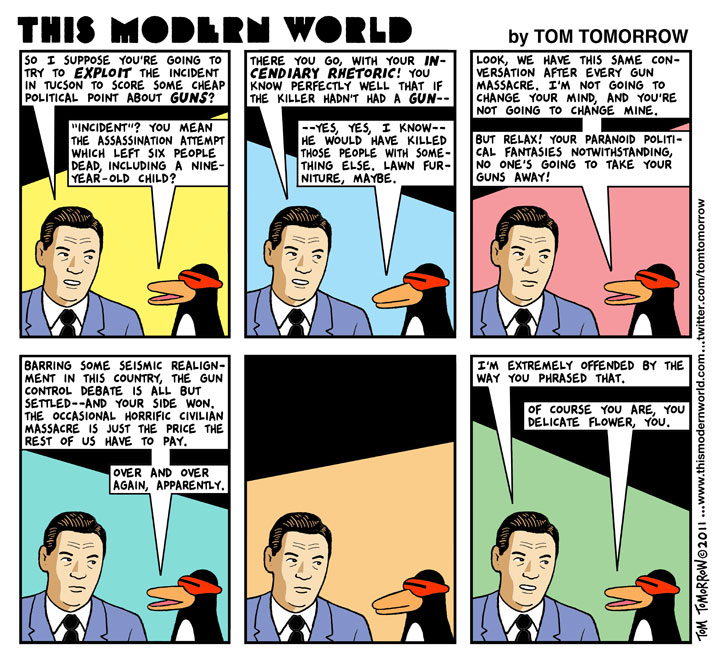
So yeah, I understand all the objections to Tony's "You can't have this!" bit. We fearmonger about some crazed nut stockpiling guns, and question whether there should be restrictions on the ownership of some weapons. So technology like Tony’s armor would probably make some people pause. Granted, we can write pages about how much the US sucks at guns, how it operates under an appalling negligence, but I've typed enough rants for now, so I'll just link to a political cartoon.

Before we move on, let's talk about something you guys have already noticed in the clips. Don Cheadle has replaced Terrance Howard as Rhodey and would continue to play him for the rest of the MCU. There are so many conflicting stories, but my understanding is that it came down to money. Like I said, Terrance Howard was the highest paid member of the cast in the first movie, making more than even Robert Downey Jr., the star of the film. 

Downey had pretty much burned all his bridges in Hollywood, and Favreau had to fight to get him to play the part, so he wasn't really in a position to negotiate and demand to much while making the first one. Of course, the first one succeeded beyond even the most optimistic predictions in large part due to Downey's performance and ad libs, putting him in a much more favorable place when the sequel rolled around. And Downey, not being a fool, took the opportunity to ask for money, which cut into the money Terrance Howard would receive. 

Howard threw a fit, but Marvel wouldn't back down and neither would he, so Howard was fired from the films and replaced by Don Cheadle. And since in subsequent years have revealed Terrance Howard to be crazy-crazy and not merely Hollywood-crazy, it might have been a smart move. 

Because there's a difference between crazy-crazy and Hollywood-crazy. You really shouldn't romanticize any form of crazy, but Hollywood-crazy can be more easily romanticized: play it off as something akin to method acting, the actor giving his all to give a good performance. Crazy-crazy on the other hand, there's no romanticizing it. 

This can be seen with Mel Gibson. Mel Gibson's anger and intensity had long been a part of his brand as an actor, but when all those tapes circulated showing just how deep and ugly his anger ran, that's when he crossed over and became crazy-crazy and not merely Hollywood-crazy. 

Rhodey's line to Tony where he basically goes, "I'm here. Deal with it," feels like it’s as much for the audience as it is in service to  the story. 

In addition to the expo, Tony has a new assistant. And since the movie barely tries to mask the matter, I'm not going to bother either. Basically, Natasha Romanoff is making her debut in the MCU. Here's a link to Linkara's take on her comic debut. 

It is a fairly solid story. Her first appearance has her trying to murder Tony Stark which is an entirely understandable reaction. Even Pepper and Rhodey probably fight the urge to choke him. But while there are some hints otherwise, Natasha is mostly the standard Russian femme fatale in her first story. The stuff about her redemption and becoming one of the good guys comes later, and I have to wonder what motivated the writers to invest such time and weight into her character. 

Something about the character must have pulled at someone to convince Marvel to go through with this idea. Maybe someone realized what a sausagefest The Avengers were and decided to add a lady to the team. Or the character could have just tugged at someone for some different reason. As a writer, I've had moments like that where someone meant to be basically a spear-carrier or someone to move the plot along, wound up demanding more of my time and attention. And experience has taught me that a lot of the time, if your intuition is pinging on something, you should really pay attention to it. Maybe it won't lead anywhere, but often it does. 

Hell, that's similar to what happened with Agent Coulson. As said in the review of the first movie, he was created to be a bit character, introduce SHIELD, try to do cleanup on Tony's hijinks, then exit, but he touched a nerve with the audience, which forced those involved with the franchise to bring him back into the story again and again. 

But all isn't well. Basically his arc reactor is slowly killing him.  

And as if it isn't one damn thing after another, he tries to do something incredibly dangerous, only to wind up in actual danger, as our boy, Whiplash aka Ivan Vanko decides to make his move. 

His shtick is well, Howard Stark, Tony's dad, screwed over his dad, so naturally, the key thing to do is unravel the secret to some insane tech and go kill Howard's son. Makes perfect sense. 

A few things, Ivan Vanko, before we go on: one, what was your initial plan? As we saw in previous scenes, Tony decided at the last minute to drive the race car, so you couldn't have just assumed he would be literally on the track when you made your movie? And two, the whole shirtless thing, really?! When it comes to costumes for superheroes or supervillains, I have a general rule: if you wouldn't fry bacon in that outfit, you shouldn't have a character go into battle in said outfit.  

Tony deals with him. Whiplash is hauled off to the pokey, only to be busted out later by Justin Hammer. 

And from what I heard, Vanko's look with the Russian prison tattoos and gold teeth, was Mickey Rourke's idea, as is the bit with the cockatiel. It does give him something of an interesting aesthetic, but it's not that interesting, and Rourke can only add so much. It doesn't help that in the big climatic fight, his idea is much the same as Obadiah Stane's: do a slightly upgraded version of the hero's bit. He does change things up a little with all the drones, but that doesn't add much. 

Really the biggest problem with Ivan Vanko is that he disappears for a good chunk of the movie. There's no sense of building tension as he's just kind of off-screen working on building robots. 

Instead, the bulk of the movie is dedicated to two things: Tony being a jackass and Tony's Daddy Issues

Yeah, the party scene alone is reason why everybody would freak out about Tony's whole "No one else can have this!" bit. Because what's keeping Tony from abusing the heck out of all this, from doing something incredibly stupid with it. Heck, that's what winds up happening. 

After Tony refuses to listen to Rhodey and Pepper trying to talk him down, Rhodey puts on some armor himself. And hijinks ensue. Once again, Tony winds up trashing his own house. This will be a reoccurring thing with him. 

Afterwards, Nick Fury is on the scene, ready to provide life advice and setup. 

Given what follows is several scenes related to Tony's daddy issues, it does illustrate some of the missed opportunities with the villain of this movie. After all, Ivan Vanko's was screwed over by Howard Stark, so he shares a certain kinship with Tony, something that could have been played with. But as said before, Vanko all but disappears from a good chunk of the movie, showing up primarily at the eleventh hour, rather than being used to build up the tension.

:sighs: Part of me wonders if I should quote "This Be The Verse" by Philip Larkin again, but I think I'll pass. 

But this is going to be a reoccurring theme in the MCU: daddy issues. Between Howard Stark, Brian Banner, Harold Barton, Odin, and Hank Pym, the Avengers can easily be called the "My Dad's a Dick!" club. Yeah, Team Daddy Issues is more concise, but I go with my name 'cause I like calling them dicks. 

And you better believe there'll be a tag related to this, though for the ease of the matter, I'll only use it if dickish behavior is seen or openly discussed. Though regarding Thanos and Ego, mass genocide goes so far beyond the realm of mere dickery, that referring to it as such, feels appalling, so the title won't apply to them. 

As for the father of our boy, Captain America, well, as I said before, outside a character core identity, some details can get fuzzy. In some versions, Joseph Rogers is a drunk who regularly beats his wife, so yeah, that qualifies him as a dick. However, according to the wiki, the MCU opted to go with the version where he died in the trenches months before his kid was even born. So he's off the hook. 

Though the dickish dads and moms on pedestals theme is something that comes up a lot in the MCU, enough that I find myself wondering about Stan Lee or Jack Kirby's childhoods. Then again, this is a fairly old motif; Marvel is hardly the originator of this trope. 

It says something about the sheer ridiculousness of the MCU that everyone's just like, "Oh Tony, get to work inventing perpetual energy and BTW, can you do this in the span of a weekend?" and just continue to talk about this like it makes perfect sense. 

But Tony gets to things, pouring over journals and video left behind by his father, when he stumbles onto this video from his father. 

Because I am scarily obsessive when it comes to my fandoms, the type who will take one brief scene, one throwaway line, and start building elaborate backstories behind it, yeah, I have done some stuff regarding the Stark family. Though really my views can be summed up by a tumblr post that said, "They were a family of geniuses who didn't know how to communicate with each other, but there was a lot of love in that little family." 

I have to say while I am into fanfiction, the Theodore Sturgeon "99% of everything is crap" aphorism really holds true. There are some gems, some stuff that will make you spend the rest of your life going, "The Horror...The Horror..."** but most of it is just mediocre. 

But I can't hate the phenomenon of fanfiction. I cut my storytelling teeth on fanfiction, telling stories to my brother, and when my family got the Internet and I discovered that other people were doing this and there was a name for all this...mindblown. It's why whenever writers say that they don't support fanfiction, while I respect their right to their opinion and understand why they might feel that way, I find myself liking them a little less. 

 I could go for paragraphs talking about the racist and sexist tropes show up, because fanfiction, like all art, for good or bad, reflects something about the society that produced it. but I'll spare you for now. Instead, I'll bring up something that really bugs me where in fanfics, unless a character's parent is depicted in canon as being as a Saintly June or Ward Cleaver-type, the emotionally absent parent gets exaggerated into so monstrous a caricature as to make the mom in a "A Child Called It" seem restrained by comparison. 

The MCU often has weird random little touches to their films, little quirks or moments that aren't really needed (not necessary for the plot or the characters), but they are just amusing. Like this scene, where Tony tries to regain Pepper's trust, is important, but there's that bit with the stick sculpture on the desk and how it drives Tony nuts. We don't get any reason for why he hates it and we don't need one, but like I said, it's a nice touch, adding a little bit of color and humor to the scene. 

And it seems to go in line with this pin, which speculates on Tony possibly having ADHD. Which I have to say, I have no problems with this headcanon. Granted, ADHD is one of my diagnoses, so I am biased.


One of the beauties of the loose/core continuity-style of comics is that you can pick and choose across the various canons and use whatever you want. Of course, I take this approach to most entertainment, holding onto what I like, throwing out what I don't, and mentally rewriting whatever I want. 

From what I can tell, most people, consciously or unconsciously, do the same when enjoying entertainment. Every time someone partakes of an entertainment medium, as the narrative unfolds, the audience takes what is being given to them and starts crafting their own narrative along with the creator's. This "As you enjoy what is being created, you too, create" idea feels similar to Octavia Butler's Earthseed faith which tenets are: 

            1. Everything you touch, you change

            2. Everything you change, changes you. 

            3. God is change.

But I could be reaching a little here. After all, not everyone has my obsessive nature. Maybe there are people who just watch something and don't go "Hmmm..." at a moment or line that interested them, and explore it in their heads a little. Maybe some people just mindlessly consume and don't think, but I do. Even silly, mindless entertainment is the product of authorial intent and sometimes it’s worth speculating why they made the choices they did.

I suppose I’ve strayed a little far from discussing the actual film and I apologize, but there’s not a lot to talk about. It is a shame because there was potential with this movie, a chance to really develop the character, but instead, they whiffed it and what we get is just setup for Avengers. 

As you can imagine, Tony figures out what his Daddy was trying to tell him and synthesizes a new element like it’s nothing. From there, it’s off to go kick some ass.

And I feel there’s another missed worldbuilding opportunity regarding Stark Industries. Okay, so now that Tony’s out of the business of making and selling weapons, what is his company making and selling? Does he create similar arc reactors for wounded soldiers or other people suffering from similar injuries? Though more importantly, Tony has basically discovered a source of perpetual energy, aka something that overturns several laws of physics and has the potential to upend the geo-political scene in who knows in how many ways. Now that we literally have a source of perpetual energy, what’s going to happen with all these saber-rattling wars in the Middle East once we’re no longer hopelessly dependent on oil to power our economy?

I’m not asking for a part by part, detailed schematics sort of thing, but a few throwaway lines or something would work. Alan Moore did something similar in Watchmen where because Doctor Manhattan can basically synthesized lithium out of nothing, electric cars are the standard. It probably wouldn’t completely alleviate the Reed Richards Is Useless trope that shows up often in the MCU and most comic book movies, but it would help a little.

Anyway, with the smackdown over and finished, let’s sum up what we got from this movie. 

First up, the villain review. As said before, for much of the MCU, the villains were its weak spot. It isn’t until Phase 3 that we start getting compelling villains; until then, the only really interesting villain is Loki. This is why my villain scale runs from 1-5, 1 being the least interesting to 5 being the most interesting. Loki is, of course, at 5, but for the most part, Phase 1 and Phase 2 villains fall in the 1-3 range. There is one so uninteresting that they have been ranked as 0 as in there is nothing remotely memorable about them. I’ll let you guys debate which villain qualifies as Zero.

Anyway, Ivan Vanko had the potential to be a much more interesting villain, but he disappears for large sections of the movie. From what I heard, it was Mickey Rourke who came up with the decision to give  his character Russian prison tattoos and gold teeth, which does add a little something to the character but not a lot. I’ll give him a two.

As for Justin Hammer, yeah, he’s a far cry from his chessmaster comic book version. Really, the thing about the character is that he wants badly to be Tony Stark, to be the charming a-hole, but he only manages one part of the equation. No points for guessing which part. Subsequent materials have revealed him to be Gay, but that doesn’t really add a lot. Representation-wise, it’s not Lefou from Beauty and the Beast-level bad, but that’s not really saying much. I give Hammer a one, making the combine total three, and the average 1.5. 

With the villains out of the way, what we got from the movie is setup for The Avengers, the debut of Natasha Romanoff, and the daddy issues that will become a reoccurring theme with Tony. The movie is still enjoyable due to Robert Downey Junior being charming as fuck, but really it is a heaping helping of missed opportunities. According to the trivia page for this movie, Jon Favreau had to deal with almost constant interference from the higher-ups at Marvel who demanded so many changes that the script was practically being written as the film was being shot. His experience with this movie would lead to Favreau declining to direct any future films with the MCU, though he would still play Happy Hogan, Tony’s chauffeur.

This is similar to what happened with the first movie which like I said, was practically being written and rewritten as it was being shot, with large portions of the film being ad libs from Robert Downey Junior, but while this worked with the first movie, it didn’t play out so favorably for the second one.

Stan Lee cameo: “Larry”

And our credit cookie is Setup for the next film on the roster, Thor.

Anyway, that’s it for now. I hope I am getting better at these reviews, but any advice will be appreciated. I’ll try to not make you wait so long for the next one.

*And this is why you don’t elect a guy who has no experience in government whatsoever into the highest office in the land and why the political outsider meme is just really stupid in general. With any other job, having experience in the profession is generally considered a good thing. If your toilet broke down and your choices are to go with a licensed plumber who has been doing this job since the Bush I administration and can take apart toilets in his sleep or this other guy who, well, he hasn’t ever actually worked as a plumber, but he’s used a lot of toilets which is about the same thing, you’d probably go with the actual plumber.

Yet people don’t apply this logic to politics for REASONS! Running a government is a far different creature from running a business, demanding an entirely different skill set AND FOR THE LOVE OF GOD, HE WASN’T EVEN A GOOD BUSINESSMAN! 

:clears throat:

Only in politics can you get elected with a complete lack of experience and while expressing nothing but contempt for the organization you want to work for. You try that with any other job and they’ll laugh you off the street.

But it must never be forgotten that the people actually wanted Hillary in office, not him. Trump only got in on a technicality. It’s petty of me to mention this, but I feel no real shame in it, seeing as Trump is the pettiest person alive. I’m still not entirely sure he’s an actual person and not just the avatars of the Seven Deadly Sins stacked on top of each other and wrapped in a Cheeto-colored wrapper.

Why the Electoral College Ruins Democracy

**There’s a reason large swaths of people on the Internet cringe at the mention of Elrond’s wife’s name. Because I’m feeling merciful, I’m not going to link to anything. Y’all can track it down yourself. I don’t want to be responsible for any trauma that might ensue.