Showing posts with label Natasha. Show all posts

Tuesday, September 13, 2022

Avengers: Age of Ultron or "The Facts in the Case of Mr. Joss Whedon"

Let's face it: Ultron deciding within five minutes of accessing the Internet that "ALL HUMANS MUST DIE!" is probably the most realistic moment in the MCU. 

Those of you know, by now, that I have a fervent, passionate hatred for one movie in particular. Don't worry; I'm not going to do a review of it. I've kind of sworn off reviewing that movie unless I'm offered a sizeable chunk of cash. I just don't think I could make a hate screed worth someone's time, plus, like I said, I have a harder time embarking on the Snyder hate rants as of late. So not going to do it, unless there's money involved.

On a slightly related note, here's my ko-fi. If you want to drop a few bucks in my cup, I can't say I'd object too strongly. 

Anyway, the reason I'm bringing up that one movie is, well, due to this article from The Dissolve. The article posits that Age of Ultron serves as a response to that movie. And I don't think it's a conscious effort to do a Take That against the DCEU, but the contrast between the two movies, the way they use their various tropes, is something to reflect on. 

Unlike Snyder's film, which has an aesthetic of gunmetal grey or, when looking for some variety, blue-grey, Ultron is bright and glorious in color. The biggest distinguishing trait, however, is the drive the Avengers have to try and save as many people as possible. They are up against a villain who wants to exterminate humanity, so in response, the Avengers decide that every life matters and go out of their way to rescue as many people as possible. Because that's what heroes do: give 'em a choice between A and B, and they'll try to find option C, which is All of the Above. They may not always succeed in finding option C, but they fight as hard as they can to do so. 

Which again, puts it far ahead of that movie, with its borderline sociopath of a hero barely bothering to try to take the fight away from a dense population center. Yeah, the bad guy was having none of it, but again, what distinguishes the heroes from the villains is that the heroes try to pay even just lip service to the value of human life. 

It's the same problem that Fred has talked about in the Left Behind-verse. Both the good guys and the bad guys seek to destroy the other and violently subjugate humanity at their feet; the difference between the two is that one side succeeds in destroying its enemies and subjugating humanity, whereas the other one fails. 

This is obviously bad form, because the most basic rule of writing a story with heroes and villains, be them superheroes or characters from some other genre, is that there needs to be a fundamental difference between good and evil. The bad guys place no value on human life, so the heroes double down on the idea that all lives matter. 

But while I have a certain fondness for movie, I would be remiss in my duties if I didn’t acknowledge that it holds a rather jaundiced reputation in the fandom.

Some of it is, I feel, mostly undeserved. Again, with only a few exceptions, whenever people go on and on about how modern superhero movie X is the “WORST MOVIE EVER!!!” I mostly roll my eyes. You kids are all spoiled with your directors that actually give a shit…any superhero fan older than thirty can tell you that the history of comic book adaptations is often a dark and scary one. It was a long time before Hollywood accepted the basic facts that as silly as these characters are, there’s a reason people love them, and they work best when they’re mostly played straight. 

But I have to admit that rewatching this movie now that Joss Whedon’s reputation lies in tatters* is a different experience. While he was the creative force behind the first Avengers movie for me, it’s this movie that somehow seems to line up better with the embittered toxic egomaniac depicted by former exes and colleagues. When the first Avengers came out, Whedon was collectively worshipped by geek culture and while all the scandals hadn’t broken the time this movie came out, for whatever reason, it is harder for me to divorce the art from the artist for this film. I’m not entirely sure why.

Again, the decision as to whether or not to enjoy the art of someone who is a terrible person, is a personal one, capable of only being made on an individual basis. It’s up to you whether or not Whedon’s behavior is a dealbreaker. With me, I’m likely to continue to enjoy the stuff I’ve already consumed but hold back on exploring any further. However great Buffy or Firefly may be, there’s also art just as equally good that wasn’t created by assholes, so why not spend my time on them, rather than on assholes. Whenever I hear talk about how Toxic Creator X gave us this or that, I find myself thinking about his victims. What great art did we miss out on because someone was driven out of the industry by the toxicity and abuse they received? 

We likely will never know. And I do not fault people who still cherish memories of Buffy or whatever projects they’ve enjoyed. I understand how it is. We say things like “It’s just a movie/TV show/whatever!” but that’s not entirely true. We forged identities and communities because of our love for mere entertainment, and sometimes much more. The critic Nathan Rabin has talked about how when he was fourteen, after being sent to a mental hospital, pretty much the only thing that got him through was an obsession with seeing Steven Seagal’s Marked for Death when he got out. I’m sure many of us have similar stories about art that, regardless of its actual quality, really spoke to us and was there for us in a moment we really needed it. I have mine, and I’m sure the rest have yours. Sometimes you have to take strength where you can find it, even if it’s trash.

And while I am only tangentially knowledgeable about Buffy, looking at it, I can understand why it landed the way it did with people. Compared with what was out at the time, Buffy was a revelation, having the blonde teenage girl be the lead and outwit the bad guys, exist as an actual character and not a male power fantasy. To say nothing about the show’s LGBT rep; from what I’ve heard for a lot of people, this was the first place they ever saw LGBT people represented and treated as, well, people with quirks and foibles like everyone else. Buffy walked so that the innumerable shows that came after it, could run. 

Okay, I should probably get to the movie and do less navel-gazing about art and artists.

Well, to start, I have to say that I never liked the reoccurring “LANGUAGE!” bit with Steve Rogers.  First of all, I think someone did the math and proved that Steve swears the most out of all the Avengers. It’s a trap Whedon and too many writers fall into when it comes to Steve, treating him like a farmboy from 1950s Kansas as opposed to an Irish Catholic who came of age in a Depression-era Brooklyn slum.

And I freely admit that I’m mixing canons here, but while it’s not so much in the MCU, Steve has traditionally been written as the child of Irish immigrants, so I’ve incorporated it into my personal canon that I carry across all adaptations. That’s the beauty of multiple canons, being able to pick and choose from whichever traits you like. I just really like the idea of him being a child of immigrants, having firsthand knowledge that all fearmongering about immigrants is BS, because time may march on, but the arguments of bigots remain the same. 

And yes, I do have comic panels about this, which I use as part of my “Captain America Secretly Hates America” exhibit.


The movie skips the setup and just drops us in.

Of course, this opening seems to come a bit out of nowhere. The people who watched Iron Man 3 are like, "Uh, didn't Tony destroy all his armors?" and really, the only assumption you can make is that at some point, he just rebuilt them. I guess it's a symptom of how it is with Tony, how he can't seem to walk away from superheroing, even as the costs of it mount. Though again, it does make you wonder to what extent they planned the plotline of the MCU. While they did plan, it obviously wasn’t down to the dot and tittle and with as many people involved with the planning, it makes sense that they would occasionally trip over each other. A minor example can be seen in the “LANGUAGE!” bit with Steve, but a bigger one can be seen with Tony’s retirement. 

But while they’re in the process of kicking ass and taking names, they face some unexpected issues in the form of the Maximoffs. And here we’ve got to talk about Wanda and Pietro.

First off, their origin for those interested. Those of you have already noticed the major changes to their background. Basically, at the time this movie was made, Marvel didn’t have the rights to the X-Men and therefore, they couldn’t use the concept of the mutants or anything related to the X-Men at all. So Wanda and Pietro were written as humans who volunteered for Hydra experiments and gained superpowers as a result. And given that Hydra is basically a Nazi organization whereas Wanda and Pietro have traditionally been written as being of Jewish-Romany descent…yeah, there’s no denying the problematic as fuck nature of this.

So why did they opt to introduce the characters? According to IMDB, Joss Whedon said he cast Quicksilver and Scarlet Witch because he thought their powers would be cool to use in a film: "Their powers are very visually interesting. One of the problems I had on the first one was everybody basically had punchy powers. Quicksilver's got super-speed, Scarlet Witch can weave spells, and a little telekinesis, get inside your head. That's good stuff they can do, that will help keep it fresh."

While raiding the Hydra base, Wanda uses her powers to mess with Tony’s mind. It is this moment that will proceed to drive his actions for the rest of the film. So he and Bruce create Ultron, which as you can probably guess, doesn’t end well. 


And while the MCU does better with its team of heroes than the DCEU, lately my thoughts have been similar to those expressed in this pin. 


Though it's not entirely accurate: we swung by 2016 to pick up Peter Parker


Because this party is the extent we get of the Avengers hanging out and being pals. While there are some nice moments, especially the hammer scene, we don’t really get to see them being pals much, which hampers the dramatic effects as the team breaks down. I’m not sure what or how they could have solved this problem within the confines of the movies. It’s one of the perks of TV series in that the long form aspect gives a little more breathing room, allowing for more monster-of-the-week and other kinds of episodes that let the writers play around with the characters even though they don’t do much to advance the overall plot. Maybe this is one of those things that could have been helped with shorts. As always, I remain a little disappointed that the MCU doesn’t run shorts before their movies ala Pixar. 


Because again, as much as I enjoy a good, well-crafted tragedy, I’m an even bigger sucker for fluff.

But you know how it is… you’re having a nice party, everyone’s having fun, and then your teammate’s secret AI project turns evil and crashes the party.

Following a lead, the Avengers track down Ultron to South Africa and here, Wanda decides to fuck with everyone’s head.

Natasha receives a vision of her past. For those of you wondering about the ballerinas, when she was in the Red Room, they brainwashed her into believing that she was a ballet dancer for the Bolshoi Ballet. And here, I fight the urge to go into a rant about what a barrel of missed opportunities the long overdue Black Widow movie was. 

Thor, like Tony, receives a vision of a dark future.

And as for Steve’s vision? Well, his is a bit trickier to quantify. I probably could count it as one of Marvel’s desperate efforts to prove Steve’s heterosexual, something they tried repeatedly to do after Winter Soldier basically supercharged the Bucky/Steve ship. But there are signs of deeper issues.


Long story short, everyone’s left reeling in the wake of Ultron and Wanda’s attacks. So Hawkeye takes them home to meet the fam.

The farmhouse scenes work so well, containing some of the most naturalistic moments of this movie. I love the fact that Hawkeye turns out to be a family man. So many superheroes are isolated, having only a handful of colleagues they confide in. It’s easy to see why so many superhero stories make this choice—fewer relationships mean fewer things to trip up the heroes and serve as something which might hamper their ability to kick ass and take names—but it could represent a heaping host of missed opportunities. 

An example of all this can be seen in the horror genre. It’s a simple enough plotline to just send a masked serial killer after some idiotic horny teenagers, but there’s a reason some of the best horror stories involve adult protagonists. The simple truth is that an adult protagonist is someone who has more to lose. Usually, an adult has a well-established life—a home, job, spouse, and children—thus, giving them more of a reason why they have a vested interest in the status quo and why they’d be so scared by the prospect of something shaking it up. Plus, an adult is presumed to have a couple of brain cells to rub together, so you can’t get away with them making incredibly dumb decisions the way a horny teenager might.

There are also more personal stakes for the hero in all this. As said before, motives like “save the world” can be so abstract and vague as to be hard to envision, but “save person X” or “save the world so I can see my kids grow up” is a bit more concrete and easier to get invested in.

Don’t get me wrong: personal relationships can also be used to be killed off for cheap drama (see for example Lian Harper), but often they can provide another angle from which to view the hero. One of the neat decisions Batman: the Animated Series made was to not merely have Harvey Dent be an ally of Batman, but to actually be a good friend to Bruce Wayne, which serves to make his inevitable fall even more tragic. Bruce isn’t just losing an ally in his war on crime; he’s losing a friend, the closest thing Bruce has to a normal relationship. Granted they didn’t do as much with this friendship as they could have, but it’s still a nice choice.


And I suppose it's high time I talked about one of the key complaints regarding this movie: the characterization of Natasha.

The attempts to pair her with Bruce in this movie are widely lambasted as an incoherent mess. On some level, I agree, but the thing is, I actually find the idea of those two being together to be interesting. Don't get me wrong; it was done badly in this movie. It comes way the heck out of nowhere and once this movie's over, it's never mentioned again.

If they had actually built up the relationship, I would actually be much more onboard. I find the idea of the two as a couple fascinating. Why? Well, I personally believe that of all the Avengers, Hulk is the one Natasha fears the most. She can't outfight the Hulk, outwit him, nor do her usual "femme fatale" bit--Hulk is a creature of rage and muscle. So having her and Bruce be together presents an interesting wrinkle on the subject. 

But given how badly it was received, Marvel chose to treat the whole thing like a cat turd: bury it and never speak of it again. And because fans tend to be an obsessive bunch (fan is short for fanatic for a reason), when not given an explanation, they'll come up with their own and plug them in. The commonly accepted one is that Natasha was deliberately trying to cultivate a romantic relationship with Bruce as a means of gaining further control over the Hulk. Because the Hulk continues to represent a dangerous loose end for the various world governments. Yeah, he saved New York City, but Banner's control over it is a tenuous one at best, as seen by his rampage through South Africa.

As I've said before, the reason the character of the Hulk endures, is due in part to the mystery surrounding the character, what exactly is it. Because while he's referred to as a "big green rage monster," at the same time, that is a rather simplistic understanding. Mark Ruffalo, in the IMDB trivia section for this movie, has a really cool quote about the relationship between the Hulk and Bruce: 

"There's a very cool thing happening in the film: Hulk is as afraid of Banner, as Banner is afraid of Hulk. Both of these guys are obviously the same guy, and they have to come to peace somehow with each other, and this confrontation is building across this film." 

 You have no idea what a cool idea that sounds to me, the idea that the Hulk is just as scared of Bruce Banner as Bruce Banner is of the Hulk. The "strongest hero there is" fears someone who, genius-level intellect aside, amounts to an ordinary human. 

I personally feel that Hulk works better as an ensemble character, rather than trying to carry a movie by himself, but stuff like the attempted Bruce/Natasha relationship, makes me wonder if it would have been better to have a Hulk movie before this one that better established the relationship. 

But that's not the only issue people have with Natasha in this movie. 

Some of the reoccurring problems with her character stem in some small part from the fact that for a while, she was the only female avenger, thus, putting her into the classic trap where one character has to represent half of the human population. It's one of the reasons I adore Black Panther or Birds of Prey. By :gasp: :choke: :pearlclutch: having more than one female character, it allows the other characters to breathe a little, demonstrate actual personalities outside of being girls with girl parts. 

Natasha has also been written more, how should I say, favorable to the male gaze, which serves to further undermine her as a character. So many times, the camera focuses on her, um, talents and assets, which is probably why Natasha doesn't attract the character hate from whinyass fanboys the way, say, Captain Marvel** does.


This beautiful artist is basically parodying the poster of the first Avengers movie, which had everyone striking cool heroic poses, except for Natasha of course. Because we must stress that she's a girl with girl parts. 


As for the part where Natasha calls herself a monster, I interpreted it as referring to the red in her ledger, but other people took other interpretations. And yeah, people who can't have kids are not monsters; this is a fairly obvious statement, but I felt like I should make it just in case. 

In light of Whedon's unraveling, people are, of course, reevaluating his characters. For a while, he was labeled as a male feminist, but histories of his abuse of actresses and exes...And as this article points out,
female characters in his works are often strong because of horrific background of torture and abuse, which isn't exactly a ringing feminist endorsement. 

However, Black Widow has traditionally been written as coming from a background of brainwashing, torture, and abuse, so this isn't Whedon's fault. 

Then again, it does gall me that so many female characters have rape backstories. Male characters become heroes or villains for a wide variety of reasons, but you have any female character in a position of power, it'll invariably turn out that she was at some point, either raped or threatened with rape. Yes, this is sadly a reality for many women, but the thing is, you don't have to do that for every character. 

It was one of the strengths of Wonder Woman in that the titular character wasn't driven by angst or a horrific backstory; she was driven by an abundance of kindness. WW just loves and cares about people and thus, wants to do what she can to protect them.

Speaking of Wonder Woman, there's the matter of Joss Whedon's infamous script. Here's the full script for those interested.

Unfortunately, the Maximoff twins' alliance with Ultron hits a little snag when it turns out that he plans on wiping out humanity by using the capitol city of Sokovia as an asteroid. 

Okay, so now you know the stakes. Ultron is basically being all, "You can save this city full of innocent civilians or the world," and the Avengers respond by going, "STFU, we're doing both!" because that's what heroes do. 

That’s what sticks with me regarding the big climax: the lengths the Avengers go to, to try to save as many civilians as possible. Even before the battle really got started, they were doing whatever they can to evacuate as many people as possible. Because again, that’s what heroes do. In the face of Ultron’s plan for mass extinction, they assert the value of human life above all else. You know they can’t save everyone, but they’re going to do their damnedest to try.

And I’m breaking the rule, but it’s something I missed in future Avengers movies, how they get knocked around and smash through buildings with no real consideration or concern for ordinary civilians. Maybe they didn’t have the time to show this, but I missed stuff like the first Avengers movie where they tried to confine the fighting to one area to lessen the number of civilian casualties and their actions in this one. Even though they’re hopelessly outclassed, I also like how they had the police trying to do what they can to protect people.

It’s part of the reason that moment in Superman: the Animated Series continues to hit so powerfully. The police officers weren’t running around completely rock-stupid; they were doing what little they could to protect people. Yeah, they’re struggling because they’re ordinary cops against supervillains, but they’re still going to do what they can because every life saved, is a victory.

Then again, given what real world police are like, this may be the most unrealistic part of these adaptations.

Okay, done bringing depressing reality into this.

Despite all the buildup with Hawkeye and his family, Pietro is the one who ends up dying, rather than Hawkeye suffering a case of retirony.

Eventually, the day is saved. The people are evacuated out, the city is destroyed, and Paul Bettany has to actually show up for work rather than just collect a sackful of cash for a voiceover.

As for cut scenes, the infamous cave scene actually makes more sense in the extended version, making me wonder why the heck they cut it in the first place. Apparently the studio forced Whedon to put the cave scene to provide buildup for Ragnarök, at least that’s what he claims.


And that’s Age of Ultron. Next up is Ant-Man.

*For those of you struggling with the paywall, let me lend you my 12-foot ladder.

**Don’t worry. We’ll get to the collective whinyass fit the fanboys through over this movie. Though they have it out for Brie Larson in general, to the point where the key to winning a fight with them is to go, “Hey look it’s Brie Larson!” then punching them right in the motherfucking face as soon as they turn their heads. 

Monday, June 13, 2022

Captain America: the Winter Soldier or “WARNING! Gush levels will be at maximum!”

Hey everybody. Sorry it took until now for the post.

I don’t know if anyone has read my “Utopia Defined” post. If you haven’t, the previous post has a link. Go check it out. If me posting on Medium.com isn’t working for you, please let me know. 

Subtitle exists because of all the MCU films, this is one of my favorites, definitely in the top three. So if I sound more enthusiastic then usual, that’s why. It’s also why this post will be hella long because again, I go all in on my obsessions. In fact, I had a hard time writing this one, because I couldn't stop thinking of things I wanted to say. At some point, I had to basically hamstring myself, be like, "Yeah, I know you want to talk about every minute of this movie, but you can't. Deal with it." 

I will also continue to document Captain America’s shameful anti-Americanism.


My two favorite fictional characters are Captain America and Samwise Gamgee. I think my standards are so high, no person stands a chance of satisfying me.

Like with Phase One, when Captain America: the First Avenger injected new life into the franchise following the mediocre Iron Man 2 and Thor, Winter Soldier does the same for Phase Two, injecting new life following mediocre Iron Man and Thor sequels. 

While each film of the MCU can be enjoyed by itself, there are certain films that serve as key films. Iron Man, having served as the cause of the Cambrian explosion of the MCU, is one of them. The Avengers, the first team up, is another one. And this film marks another turning point, forever casting a shadow over subsequent plotlines. 

Because up to this point, we had a fairly good idea as to who were the good guys and who were the bad guys when it came to the MCU. We also probably hadn’t given much thought to SHIELD beyond “oh yeah, that's the government Men in Black like organization.” This film would forever change that, prove that the definition we had, was murkier than we thought.

Though before we get into the film proper, I have one gripe: what exactly are Steve’s superpowers supposed to be? Because I thought the super-soldier serum merely put him at the peak of human condition/performance, yet several times in this movie, I’m like, “Okay does he have a Wolverine-style healing factor?” Don’t get me wrong—I’m well aware that humans are much more durable in action movies than in real life—but even by those standards, I have to protest. I generally like to have some parameters regarding a superhero's powers. 

So what’s our boy Steve Rogers been up to following the Battle of New York? Well, here’s a day in the life of Steve.


The total stranger in question is Sam Wilson aka the Falcon who makes his debut in this movie. Sam also works as a VA counselor, and I have to give him credit in that in his interactions with Steve, he seems to be the only one who recognizes that "Hey Steve's actually going through some shit." Steve is a twentysomething who survived a war and somehow wound up in the future, having to deal with the fact that everyone he knew either has one foot in the grave or is in the grave. That's some pretty heavy shit, and combined with the fact that with the exception of his intro film, Captain's story is one of constant disillusionment (i.e. Steve is constantly being betrayed by or letdown by someone), I have to give the stink-eye to just about everyone in Steve's life, because it feels like he’s received little, if any, help with this.

Then again, Tony’s PTSD is much more visible, and he doesn’t get much help with it either, just everyone hating on him for it. So the people of the MCU just generally suck when it comes to mental health. 

Though I do like his conversation with Sam where they discuss his list. 


This is the American version of his list. The MCU proceeded to create several different versions of the list depending on what country you're watching this movie in. 

Again, the "Man Out of Time" plot point has become a key part of Steve's background, and any writer worth its salt, has the sense to plow this fertile ground silly. 

I imagine Steve would probably pleased with most of the changes in the modern-era, even as he might struggle to parse out this new world. I imagine he very quickly becomes annoyed with the way people romanticize WWII. He was there; there was nothing romantic about it. And again, I will continue to say that while superhero films are inherently a romanticization, I still think that leaning on some of the more unsavory aspects of the WWII era would go a long way towards fleshing out Steve Rogers. Once you understand things like Eugenics, how Steve would have grown-up his entire life hearing about how the world would be a better place without him in it, and how it was pretty much held to be true by just about every educated person of the time and undergird Nazi ideology, you understand why he's such a rule-breaking little mothereffer. He knows from personal experience that the best and brightest can be horribly horribly wrong. 

I also use this justification as to Steve's more enlightened views on race; basically, at some point, he was like, "If I can't believe what they say about me, can I believe what they say about the Blacks and the Jews?" Hence his more enlightened views.

Though at the same time, Steve was still raised within a very toxic stew of a culture when it comes to race. And while many would like to reduce racism and make it the product of individual assholes, the trouble is that all beliefs and prejudices are interwoven into the culture. Meaning that racism is less about the individual attitudes of people and more about systems of power and control under which ordinary people seldom stand much of a chance. No matter how well-meaning a person may be, we will invariably repeat toxic messages given to us. 

So like it or not, Steve probably has his own issues to deal with regarding race. He would have grown up with the Civil War being taught about as the Lost Cause. But basically once Steve wound up in the new era, he realizes he's wrong and sets about educating himself, which is pretty much what every member of the dominant group needs to do. Steve may slip up and occasionally use the word "negro" or "colored" because those were appropriate terminology of his time, but he promptly apologizes afterwards because Steve Rogers is a lot of things, but an asshole isn't one of them. 

Okay, I suppose I should probably stop with all the headcanons and get back to the movie. I realize not everyone has my obsessive nature where I take one off-hand line, scene, or something I read and go all galaxy-brain with my headcanons. I apologize. I still have no idea how normal people consume pop culture; the idea of just sitting there and taking in what is given me and not trying to explore mysteries in my head (i.e. go "Okay, so what did he mean by X?"), writing scripts, or theorizing just seems completely alien to me. 

But Steve unfortunately can't just spend all his time hanging out with Sam, no matter how good an influence he may be. He's got work to do.

The movie makes an interesting choice in choosing to have Steve and Natasha partner up. I know as a general rule that the people who set up the MCU planned much of what would happen but given some of the continuity hiccups that show up every now and then, it obviously wasn't planned down to the dot and tittle. I often wonder how much freedom the directors have when it came to the plan. 

This film is directed by the Russo Brothers, Joe and Anthony, who would eventually go onto become some of Marvel's go-to directors, giving us Captain America: Civil War, Avengers: Infinity War, and Avengers: Endgame, but at the time of this movie, Marvel was taking a chance in letting them have a turn. If you look over their IMDB resume, up to that point, the Russos had mostly done sitcom work, the most notable of their credits being the second paintball war on Community. Hardly, the first thought you'd have when you're like, "Okay, I need to get someone to direct the next big-budget installment of a major blockbuster franchise."

Anyway, back to my original point, I wonder if the Russos were the ones who made the decision to have Natasha and Steve share a close partnership, or if it was some other person's idea. Whoever it was, it's a smart move when we look at what the characters represent. 

Steve is the product of the WWII era, an era which has been much romanticized, upheld as "The Good War" and given a wholesomeness that is completely out of sorts with the reality of any war. As said before, however just the cause of WWII may be, the Allied Forces still plunged deep into a sea of grey, morality-wise. Then again, war is inherently a murky action, only appearing straightforward in hindsight. As said before, a good example of this grey morality is that at the beginning of the war, one of the things the Allied Forces took offense at the Axis Powers for doing, was their bombing of civilian targets. Yet by the end of the war, the Allied Forces are also bombing civilian targets. 

This conversation between Steve and Nick gives the briefest of touches when it comes to the moral compromises of WWII, but doesn’t go much further than that, unfortunately. 

Natasha, meanwhile, has, throughout her history, been a product of the Cold War, a conflict much murkier and much harder to romanticize. It technically never turned, well, hot, and technically the US came out on top, but we still haven't fully reckoned with the decisions made during the conflict. For good or for ill, we are still being shaped by these decisions, yet if you were to mention the words "Operation Ajax," most people would have no idea what you're talking about, even though said event forever defined the Middle East. The Conservatives have managed to mostly rebrand Vietnam as a war which we totally could have won, were it not for all those hippies harshing everyone's mellow what with their pointing out the massive civilian casualties. 

I don't know if I'm breaking my rule about leaping ahead--I probably am--but I like the fact that Natasha and Steve's friendship stays a friendship and never, at any point, turns into a romance. I want more male-female friendships that stay friendships, thank you. 

What’s interesting about this movie is how little in its earlier stages it resembles a superhero film in terms of tone. As many have pointed out, early on this film more resembles a political thriller from the 60s or 70s where you have your good guy hero uncover a massive conspiracy, forcing the hero to go on the run, and try to piece together what’s going on. The Russo Brothers have cited the 1975 thriller Three Days of the Condor as their inspiration saying that this film could almost be referred to as “Three Days of Captain America.”

For the record, as part of my preparations for this review, I did watch Three Days of the Condor. It was okay. Don’t really have much to say about it.

And however good this movie is, it does lose some of its paranoid, almost claustrophobic nature on the rewatch, once you know the big twist.

The big twist I've been tiptoeing around throughout this post? I'll let one of the characters explain it for you.

Basically, the organization Steve spent WWII grinding into the dust, never really went away and massively infiltrated the US government and possibly many other ones and has spent the past seventy years orchestrating events from the shadows. With the help of the helicarriers mentioned in the conversation between Steve and Nick, they'll soon be able to kill anyone who stands in their way, unless Our Hero stops the launch. 

The film uses Operation Paperclip to explain how and why Hydra scientists were brought over to the US to work for the government. Operation Paperclip was a very real phenomenon and is further proof as to the ambiguities of WWII and the Cold War. Because the popular meme regarding WWII posits it as a righteous crusade against the Nazis, people who used to be painted as unequivocal villains, yet after the war, the US government is colluding with Nazi scientists, so we can get the jump on the USSR, even though the Soviets had been our allies in the war.

Again, I hope no one gets the wrong idea regarding my views of WWII. I am totally on Team Nazi Punks Fuck Off! I believe in the cause of stopping fascism and spend my days eyerolling over all these centrist concern trolls who hem and haw over the appropriateness of punching Nazis. Decades of media has continually depicted Nazis as the bad guys, yet now that they’re making a comeback*, now, our discourse is filled with obsessions with a false civility. :deep breath:

What I am opposed to, is the way WWII is overly romanticized to the point where people have forgotten just how the Nazis rose into power in the first place, how Hitler’s regime functioned, how he was aided and abetted by so many of the governments which would later oppose him. 

Though I’m wondering if I’m contradicting myself when it comes to my views on romanticization. For all the hate it gets, I do feel it has some value. It’s why I started my Utopia Defined project, because I felt our political horizons had become constrained. My views are just complicated. Do I contradict myself? Well, then I contradict myself. I am large; I contain multitudes.

Oh and like Linkara, I feel no shame in using the terms “Nazis” and “Hydra” interchangeably for most of the same reasons. While Hydra and the Nazis broke off from each other, Hydra has always been painted as a fascist organization with trappings very similar to the Nazis and beliefs very similar to those of Nazis. I, myself, am a champion hair-splitter, but even I have my limits. If they look like Nazis and sound like Nazis, call them fucking Nazis.

Hydra’s Project Insight also has eerie reverberations in our era of drone warfare. It started with George W. Bush, but Barack Obama expanded it, and there’s a scary lack of oversight to the program. Basically, the War on Terror has expanded to just about every country in the Middle East and we have no way of knowing which names are on the list and why. And since cases like Anwar al-Awlaki** prove that not even an American citizenship will protect you from drone strikes, we have to face the fact that the President of the United States can straight-up execute its own citizens for whatever reason they deem appropriate. And well, as the rule of Foucault’s Boomerang states that weapons/tactics used to suppress uprisings on its enemies abroad will eventually come to be used against its own people, we can probably assume that drone warfare will eventually be used on American soil. Even though given that the police can all but execute you for whatever reason they feel like, maybe we don't need drones to do the job. 

So Cap has discovered that the organization he's working for, is full to the brim with Nazis. And if that isn't enough, it turns out that the titular Winter Soldier who has been trying to kill him, is his tortured best friend who he thought had died after falling from a speeding train into the Alps. 

 Looking back, this whole movie is about the art of misdirection. Because again, going in, we thought we had an idea as to how the Marvel Cinematic Universe worked, thought we knew who the good guys and the bad guys were, only for it to turn out to be brutally wrong, forcing us to now look at everything that had happened prior in a new light. 

Like remember how the SHIELD council wanted to nuke New York to save the Earth from an alien invasion? Well, what if Hydra had all kinds of plans to use that to push forth their agenda on an even greater skill, which would work because the death of 8 million people? Everyone would be scared and willing to go along with anything and everything. It'd be 9/11 on steroids. 

Oh and the following is totally canon: Phil Coulson saved Steve’s life by being a fanboy. 


I imagine Steve being like, “Uh, thanks?” in response to this.

And with Senator Stern being revealed to be Hydra? Well, that gives new insight into how in Iron Man 2 he wanted badly to get his hands on Tony's technology. 

Of course, the existence of this movie proves that Tony's not as great a hacker as he claims to be, but hey, maybe after eating all that shawarma, he just forgot to get around to checking any of the other stuff he'd gotten from SHIELD.

Even the subtitle of this film is kind of an exercise in misdirection. After all it, along with the promotional materials, positions the Winter Soldier as the film's Big Bad, only for it to be revealed that he's basically a tortured POW who lacks the one freedom afforded to any POW: the ability to hate the people who are horribly abusing him. The so-called Big Bad is actually entirely lacking in agency of his own, a tool used by others. 

Though when it comes to the actual villain of the film, Alexander Pierce? For those of you wondering, he's a solid one on the 1 to 5 villain scale. He's not completely lacking in any memorable qualities ala Malekith, but Pierce is kind of the embodiment of so many of the MCU's villain problems in Phase One and Two. He's basically an old man in a business suit, interesting for the organization he represents, but he could easily be replaced by another character, say, Senator Stern, without the movie being affected by it at all. 

Anyway, Steve is understandably shaken and pissed off by everything that's happened. Like I've said before, with the exception of his intro film, nearly every appearance has Cap being betrayed or letdown by somebody. This film represents the biggest of that moment and probably the most impactful on his character. And while I can't go too in depth with this without breaking my rule about skipping ahead, much of Cap's actions in Civil War really make sense in light of this movie. :clamps mouth shut so I won't lecture any further:

Those of you know that I ship Bucky and Steve, believe that their friendship clearly goes far beyond a brotherly one. I just find the idea of a relationship between the two to be fascinating. Bucky is one of the few people who knew Steve back when he was a 95 lb. asthmatic, the one person who always believed in him and thought he was worth something, even before he was shot up full of super-soldier serum. Growing up in a culture which, like I said, constantly told him the world would be better off without him in it, you better believe that having someone like Bucky on his side meant the world to Steve. 

The repeated phrase between the two of them "I'm with you til' the end of the line" has connotations that go far beyond mere brotherly love. Though to the extent that bisexuality or homosexuality was talked about back then, well, I'm afraid I only have a laymen's/surface-level understanding of it, but probably to the extent that it was talked about, it was considered a deviancy that could be fixed via a proper heterosexual marriage. Supposedly, the Brooklyn neighborhood where Steve and Bucky would have lived, had a thriving LGBT scene, but the essay where I read this, has disappeared into the ether that is the worldwide web. 

But what I keep coming back to, regarding my Steve/Bucky ship, is the lengths they go to for one another. To leap ahead briefly, Civil War forever clenched it for me because, well, when it comes to a fight, they are willing to take their own knocks; they don't enjoy getting beat up, but they can take it. However, the surest way to really get them to go into "Oh Fuck You!" mode is to go for the other one. Twitter thread with further proof to drive the point home.

I do wonder if that was one way that Erskine's serum served as a relief for Steve, not just that he no longer has his myriad of health problems, but...well, remember the story said that the serum basically fixed what was wrong with him, so the fact that his feelings for Bucky remained even afterwards, proved to him once and for all that there wasn't anything wrong with these feelings; he wasn’t broken. 

It may be one of the greatest treats for him of the new world; he and Bucky can openly be together. 

I've also heard it theorized that the MCU version of Bucky Barnes is kind of a melding of two supporting characters from the life of Steve Rogers: Bucky Barnes and Arnie Roth. For those who don't know, Arnie Roth was basically a lot like the MCU depiction of Bucky in that he was a friend of preserum Steve Rogers who regularly rescued him from bullies and always thought he was worth something, even before Steve underwent the procedure. Roth is Jewish and is later revealed to be Gay, traits which many Steve/Bucky fans have incorporated into their headcanons regarding Bucky. 

Did I mention that the comic from which this panel was taken from, came out during the height of the AIDS epidemic during the 80s? So Cap is making a radical statement here. I wonder if I should add this to my list of exhibits in my "Captain America is an America-Hating Bastard" exhibit. 

FYI, the Bernie Cap is referring to is this woman, a Jewish Bisexual artist.

Though just as I shouldn't use the fact that one of them is named after a a president widely suspected to be Gay as support for my ship, I also shouldn't use the fact that one of the actors involved has a history of playing tortured Gay Boys either. 

Oh, all right, enough slash headcanons, back to the movie. 

I suppose we should talk about this scene which has to rank as one of the most heart-breaking and disturbing in the MCU. 

The Russo Brothers summed up their planning for this scene as thus:


The shirt-removing innovation works not just from a pervy “Sebastian Stan is hot" perspective, but also because it adds another note of vulnerability to the scene. The whole scene illustrates the paradoxical nature of the Winter Soldier's role in Hydra. The thing is, he could take out all the soldiers in the room if he wanted to, but he can't, because again, he lacks the one freedom afforded to any POW. His shirtlessness serves as a visual symbol of the power disparity involved between him and the men he serves: he's half-naked while being surrounded by soldiers in head-to-toe SWAT gear. 

The scene is even more heartbreaking than the Empire Strikes Back one, because Han didn’t completely have what little sense of self he possessed, destroyed. Whereas poor Bucky…basically he doesn’t have enough context to put together the few slivers he remembers, but for the first time in a long time, there’s something there. For the first time in ages, he knows he is being lied to. So as the machine warms up, he is begging himself to hold onto this name, this face; this is important and he cannot afford to lose this.

Though the line in Pierce’s monologue where he says, “And I need you to do it one more time…” well, it doesn’t take long to make some connotations about what this means. My personal headcanon is that Hydra had decided that once the helicarriers launched, they would no longer need the Winter Soldier. Why go to the trouble of keeping him, when you can program coordinates into a computer and have them scratched off with no muss, no fuss? 

That’s why, well, if you’ve watched any of the fight scenes with the Winter Soldier in this movie and have been like, “Y’know he seems to be the opposite of a stealthy assassin,” now you know it’s basically because Hydra no longer gave a fuck.

Though Natasha said that the Winter Soldier had been linked to dozens of assassinations over the past 50 years, but Bucky wound up Hydra’s custody back in 1945, 70 years ago. So did Bucky hold out and resist for 20 damn years or are there actions Natasha doesn’t know about?

One last nitpick regarding this scene: if you watched First Avenger, you’d recall that Zola was arrested on the train very shortly after Bucky fell. But I’m willing to accept that after falling hundreds of feet from a speeding train, Bucky’s recall might not be what you’d call a 100% accurate.

So everything’s in place for the big action climax. While it is generally a satisfying one with plenty of tension, I do feel the movie isn’t as strong without the “who can I trust?” paranoia tone of earlier. Don’t get me wrong; there are still some great fight scenes, especially the final fight between Steve and Bucky. But none of them are as creative or nail-biting as the elevator fight from earlier. 

The elevator fight frequently makes the list of best MCU fight scenes, which is completely understandable. The creativity and tension, along with its use of such a small space, makes it well worth watching.

I could easily go on and on with this movie, create headcanons within headcanons until the end of time, but I’ve already made it so that no one will ever go to a movie with me, so let’s wrap this up.

The day is saved. In the wake of the helicarrier crash, all of Hydra’s files are dumped onto the web for the world to see. Regrettably, this will only receive a scant mention in future films. 

For those interested, here are the two credit scenes. Wanda and Pietro make a cameo, but I’ve decided not to link to their origin story. Let’s save that for Age of Ultron when they play a bigger part. 

Next on the roster is Guardians of the Galaxy Vol. 1. See you until then.


*The future was supposed to be space travel, dammit, not Nazis making a comeback!

**If you want to read more about the assassination of al-Awlaki and generally all the secret wars we're fighting all over the Middle East and Africa, Jeremy Scahill's book Dirty Wars is both fascinating and terrifying. There's also a documentary based on said book for those of you who don't like reading. 

The whole think with Anwar al-Awlaki is particularly fascinating in that in the wake of 9/11, he was often profiled as an example of a moderate Muslim who decried the terrorists' actions as antithetical to Islam. What turned him radical was being repeatedly harassed by law enforcement/intelligence organizations.

Though the real sad/scary part is the death of Abdulrahaman, his son, who was killed a few weeks after his father. Whatever your issues with his dad, Abdulrahaman was a minor and was guilty of nothing more than having a terrorist recruiter for a father. 

Monday, December 21, 2020

Iron Man 2 “Electric Boogaloo”

Usually the second superhero film is where the people involved, stretch their creative muscles. The general attitude is that given that anyone who sees the second movie, likely saw the first one, chances are pretty good that they know the hero’s general shtick and can cut to the action. Most trilogies seem to be like the three-act structure stretched out on a wider scale. Don’t get me wrong; usually each individual film is still able to stand on its own, with its own arcs, but overall, a trilogy is an expanded three-act structure.

A good example of this phenomenon can be seen with the original films that made up the Star Wars trilogy. Each individual film has a complete beginning, middle, and end of its own, and can be watched without having seen the others (though it adds to the show if you’ve seen the others), but overall, each film can represent the beginning, middle, and end structure of a wider story when zoomed out. A New Hope is Act One, introducing our heroes, before sending them off on their adventure. Empire Strikes Back is the middle, where basically, the heroes are put through the wringer, as they are really forced to deal with the complexities that come up as a result of the path they’ve chosen. Under these circumstances, the heroes can rise to the occasion and triumph over their demons, or be trounced by them. Empire breaks with the tradition of most mainstream films by ending on a decidedly melancholy note: most of the heroes escape by the skin of their teeth and for one, the future is even more uncertain. Then we have Return of the Jedi where the heroes overcome their struggles, triumph, and most of the important plot threads are resolved.

After Iron Man introduced us to Tony Stark, Iron Man 2 should have been a real chance for the writers to really put Tony through the psychological wringer and with Tony, there’s a wealth of opportunities when it comes to how you’re going to do that. As established, Tony is filthy stinking rich and hasn’t really ever had to struggle for anything in life; clearly, the thing to do is make the guy struggle. Force him to really have to experience the physical and psychological consequences of what he has to do, put him in a situation that cannot be solved by his usual tactics of “throwing money at it” or “blowing it up.” Tony’s always been something of an arrogant ass, so take the wind out of his sails and force him to have to scramble for a bit.

Instead, what Iron Man 2 gives us, is basically setup for the first Avengers film. It is still a lot of fun, due to Robert Downey Junior being charming as fuck, but there’s a wealth of missed opportunities here. And the sad part is, there are hints of a more promising story.

Iron Man fans could reasonably assume that at some point, the franchise was going to tackle its version of the classic “Demon in a Bottle” arc. The original nine issues, written by David Michelinie and Bob Layton, introduced alcoholism to Tony’s history. And as I’ve said before, despite the dated aspects (it ran from March-November 1979) and the sublime silliness that only comic books can possess, it is a fairly solid depiction of alcoholism. The story works because the alcoholism feels like a natural extension of Tony’s character. He’s not merely acting like a stereotype of an alcoholic; he’s being Tony Stark while being an alcoholic. 

Bob Layton said, regarding the arc, "I'm gonna quote David Michelinie here, that it was never our intention to do anything relevant. We were paid to, basically, do the next episode of Iron Man. [It's] just [that in] that particular issue, alcoholism was the bad guy. Instead of Doctor Doom or somebody like that, it was the bottle. That was our villain of the month. And that's really the way we treated it. We built everything up to that. But the point of it is, it was never... we never attempted to be relevant. It just... in the corporate world, what gets to guys? What causes the downfall? Usually it's greed, or it's sex and drugs, right? Well, we couldn't do the sex part, right? Alcohol wasn't talked about all that much, really, to be honest with you. Especially with kids, you know, in that particular era. But, you know, we treated it as we intended to, as the bad guy."

Comic books often have a very loose continuity. There is a general core continuity that mostly remains true across the various adaptations, but outside the core, much of the character’s history can be considered optional. Working within the confines of the core, the writers can explore various ideas and maybe add onto the character background. If the ideas explored are generally well received, then the arc unfolds as planned. If the fans’ collective response to the new ideas is “That’s a bad idea and you should feel bad!” then chances are, at some point, the story will be retconned out of existence. Maybe it will be a formal retcon or the comic could treat it like a cat turd, where they just try to bury it and move on.  But if a story idea is really good, it can achieve enough status to ascend and become part of the core canon.

That’s what happened with Tony Stark’s alcoholism. Writers mined this trait for future plotlines and in nearly every continuity, his alcoholism comes into play at some point. Tony Stark is a recovering alcoholic. That’s who he is.

We can see vestiges of the “Demon in a Bottle” plotline in this movie. Tony’s tendency towards excess and fondness for alcohol is depicted in both this movie and the prior Iron Man film. This movie also has a character named Justin Hammer, just like in the original arc. Granted, the MCU version of Hammer is a far cry from the version in the original arc, but with some reworking, the arc could still work. And given Robert Downey Jr.’s history, he could really dig deep and add some personal touches to the storyline.

From what little I’ve gathered, the people involved with these movies had planned to implement the Demon in the Bottle arc, but the idea was nixed by Disney. I’m not really sure why. They’re okay with Tony becoming more riddled with PTSD as the franchise unfolds, but having him hit the bottle is apparently a bridge too far.

Anyway, I’ve talked your ear off. I suppose I should talk about the actual movie, which despite the missed opportunities, was still a lot of fun. 

It’s been six months since our boy basically announced to the world that he is Iron Man, thus leading to the trend of the MCU generally discarding secret identities. 

Tony has been keeping busy, running a massive Stark expo, and testifying before congress.

As you can probably guess, the US government is more than just a wee bit interested in Tony’s suit and really, you can’t blame them. You show something like that off and you better believe the US military is going to take notice, especially after that “training exercise” from the previous film. So the US government wants their hands on Tony’s tech.

Tony, naturally, is all, “I’m not going to.” This makes sense, seeing as Tony has long been written as something of a Libertarian “Keep the government out of my business!” kind of conservative, but also because he knows that once he hands this over to the government, he cannot control what happens next with these weapons. They could use them for whatever conflicts they want, sell them to whichever ally is willing to pay, and said ally could sell them off to whoever they want, and so on and so on. Having received a personal crash course in the reality of the weapons trade in his first movie, like hell is Tony going to turn it over. 

Of course, there are obvious rejoinders to this argument, some of which are pointed out. First of all, there’s the most obvious: if Tony can figure this out all by his lonesome, what’s keeping some other citizen from a less human rights-friendly nation from doing so? Of course, in reality, there will be a few super geniuses watching the footage of the fight between Tony and Stane who would manage to piece together how some of the tech works and they’ll get together and manage to completely figure it out. Also, if SHIELD, which is a government organization, did the cleanup for the Stane vs. Stark fight, then they can probably study the wreckage and equipment left behind and work it out from there.

And Hammer is right to point out that Tony Stark is just asking everyone to trust that he will totally use this power for the greater good and will not abuse it in the slightest. It’s worth pointing out that later in this scene Tony says that he has privatized world peace. This needs to be pointed out because privatization is an idea that keeps coming up again and again. 

Under Neoliberalism, privatization is key. Basically their view of government is that they feel the government should provide as few services as possibly, with the bulk of services being carried out by private industries. At least, they believe this until corporations crap the bed spectacularly, because that’s what corporations do every time regulations are relaxed. Then suddenly corporations become unabashed advocates for government intervention. 

But here’s the thing: privatization generally results in shittier, more expensive service for everyone. Because even defenders of corporations will admit that corporations exist to turn a profit. Therefore, they will do whatever they can to maximize their goals by cutting corners or jacking up prices or any number of tactics. And no matter how much the Rich market themselves as purely logical and honest masters of the universe, they can and will do whatever they can to increase profit, no matter how under-handed a tactic may be, regardless of the dangers it may present. All regulations that exist regarding worker and consumer safety, are written in blood. 

The idea is that businesses are more efficient than government, but frequently what happens is incidents like when Verizon throttled the data of firefighters during a major wildfire season, only relenting when the fire department upgraded to a more expensive plan. 

Now this is legitimately anger-inducing, but this sort of thing happens when dealing with organizations that value profit above all else; they're going to do whatever they can to increase profit, acknowledging extenuating circumstances only when they are forced to. 

Government gets a lot of well-deserved bad press, but it has also been so villainized that people forget that it can do a lot of good. 

This can be easily illustrated by the COVID crisis. Vietnam organized almost immediately when the virus came to the fore, mandated masks, completely shut down their economy, save for places like grocery stores or other places associated with providing food, and did everything they could to make necessary testing and medical equipment as widely available as possible to those who need it, while having a strong social safety net support the public during this trying time. As a result, for them, the crisis is mostly over, and they can enjoy holiday get-togethers without the looming threat of a major pandemic. 

Whereas the US...That sound you hear is me crying and laughing bitterly. Basically, we're burying on average some 3000 people every day, because of our dumpster fire-in-chief*. 3000, for those of you wondering, is close to the number of people who died on 9/11, so yeah, we're experiencing 9/11 over and over. 

Also businesses, despite their reputations, tend to be bad at innovation. Because they exist to turn a profit and pretty much immediately have to start doing so, they don't have the resources needed to follow an idea that may take decades to come to fruition. People say, "Capitalism made your iPhone," but as this short video shows, all the tech that makes up the iPhone came about from government-funded research. 

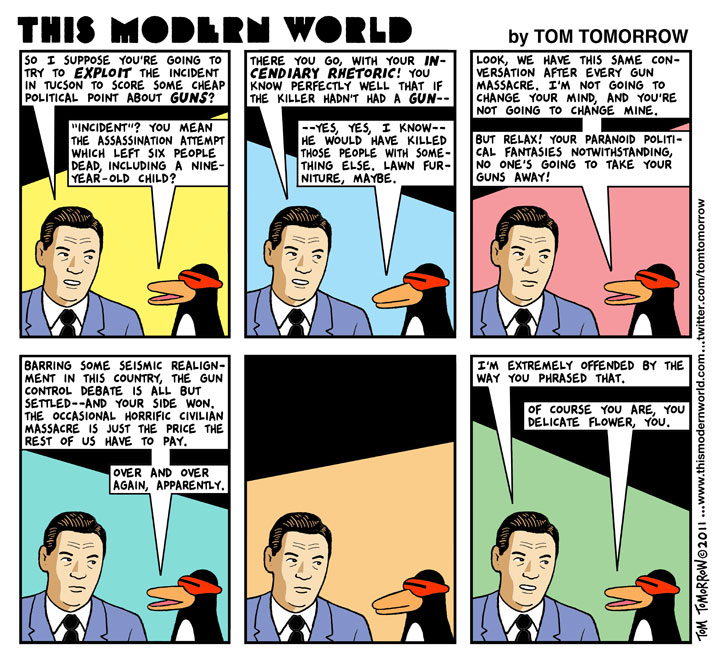
So yeah, I understand all the objections to Tony's "You can't have this!" bit. We fearmonger about some crazed nut stockpiling guns, and question whether there should be restrictions on the ownership of some weapons. So technology like Tony’s armor would probably make some people pause. Granted, we can write pages about how much the US sucks at guns, how it operates under an appalling negligence, but I've typed enough rants for now, so I'll just link to a political cartoon.

Before we move on, let's talk about something you guys have already noticed in the clips. Don Cheadle has replaced Terrance Howard as Rhodey and would continue to play him for the rest of the MCU. There are so many conflicting stories, but my understanding is that it came down to money. Like I said, Terrance Howard was the highest paid member of the cast in the first movie, making more than even Robert Downey Jr., the star of the film. 

Downey had pretty much burned all his bridges in Hollywood, and Favreau had to fight to get him to play the part, so he wasn't really in a position to negotiate and demand to much while making the first one. Of course, the first one succeeded beyond even the most optimistic predictions in large part due to Downey's performance and ad libs, putting him in a much more favorable place when the sequel rolled around. And Downey, not being a fool, took the opportunity to ask for money, which cut into the money Terrance Howard would receive. 

Howard threw a fit, but Marvel wouldn't back down and neither would he, so Howard was fired from the films and replaced by Don Cheadle. And since in subsequent years have revealed Terrance Howard to be crazy-crazy and not merely Hollywood-crazy, it might have been a smart move. 

Because there's a difference between crazy-crazy and Hollywood-crazy. You really shouldn't romanticize any form of crazy, but Hollywood-crazy can be more easily romanticized: play it off as something akin to method acting, the actor giving his all to give a good performance. Crazy-crazy on the other hand, there's no romanticizing it. 

This can be seen with Mel Gibson. Mel Gibson's anger and intensity had long been a part of his brand as an actor, but when all those tapes circulated showing just how deep and ugly his anger ran, that's when he crossed over and became crazy-crazy and not merely Hollywood-crazy. 

Rhodey's line to Tony where he basically goes, "I'm here. Deal with it," feels like it’s as much for the audience as it is in service to  the story. 

In addition to the expo, Tony has a new assistant. And since the movie barely tries to mask the matter, I'm not going to bother either. Basically, Natasha Romanoff is making her debut in the MCU. Here's a link to Linkara's take on her comic debut. 

It is a fairly solid story. Her first appearance has her trying to murder Tony Stark which is an entirely understandable reaction. Even Pepper and Rhodey probably fight the urge to choke him. But while there are some hints otherwise, Natasha is mostly the standard Russian femme fatale in her first story. The stuff about her redemption and becoming one of the good guys comes later, and I have to wonder what motivated the writers to invest such time and weight into her character. 

Something about the character must have pulled at someone to convince Marvel to go through with this idea. Maybe someone realized what a sausagefest The Avengers were and decided to add a lady to the team. Or the character could have just tugged at someone for some different reason. As a writer, I've had moments like that where someone meant to be basically a spear-carrier or someone to move the plot along, wound up demanding more of my time and attention. And experience has taught me that a lot of the time, if your intuition is pinging on something, you should really pay attention to it. Maybe it won't lead anywhere, but often it does. 

Hell, that's similar to what happened with Agent Coulson. As said in the review of the first movie, he was created to be a bit character, introduce SHIELD, try to do cleanup on Tony's hijinks, then exit, but he touched a nerve with the audience, which forced those involved with the franchise to bring him back into the story again and again. 

But all isn't well. Basically his arc reactor is slowly killing him.  

And as if it isn't one damn thing after another, he tries to do something incredibly dangerous, only to wind up in actual danger, as our boy, Whiplash aka Ivan Vanko decides to make his move. 

His shtick is well, Howard Stark, Tony's dad, screwed over his dad, so naturally, the key thing to do is unravel the secret to some insane tech and go kill Howard's son. Makes perfect sense. 

A few things, Ivan Vanko, before we go on: one, what was your initial plan? As we saw in previous scenes, Tony decided at the last minute to drive the race car, so you couldn't have just assumed he would be literally on the track when you made your movie? And two, the whole shirtless thing, really?! When it comes to costumes for superheroes or supervillains, I have a general rule: if you wouldn't fry bacon in that outfit, you shouldn't have a character go into battle in said outfit.  

Tony deals with him. Whiplash is hauled off to the pokey, only to be busted out later by Justin Hammer. 

And from what I heard, Vanko's look with the Russian prison tattoos and gold teeth, was Mickey Rourke's idea, as is the bit with the cockatiel. It does give him something of an interesting aesthetic, but it's not that interesting, and Rourke can only add so much. It doesn't help that in the big climatic fight, his idea is much the same as Obadiah Stane's: do a slightly upgraded version of the hero's bit. He does change things up a little with all the drones, but that doesn't add much. 

Really the biggest problem with Ivan Vanko is that he disappears for a good chunk of the movie. There's no sense of building tension as he's just kind of off-screen working on building robots. 

Instead, the bulk of the movie is dedicated to two things: Tony being a jackass and Tony's Daddy Issues

Yeah, the party scene alone is reason why everybody would freak out about Tony's whole "No one else can have this!" bit. Because what's keeping Tony from abusing the heck out of all this, from doing something incredibly stupid with it. Heck, that's what winds up happening. 

After Tony refuses to listen to Rhodey and Pepper trying to talk him down, Rhodey puts on some armor himself. And hijinks ensue. Once again, Tony winds up trashing his own house. This will be a reoccurring thing with him. 

Afterwards, Nick Fury is on the scene, ready to provide life advice and setup. 

Given what follows is several scenes related to Tony's daddy issues, it does illustrate some of the missed opportunities with the villain of this movie. After all, Ivan Vanko's was screwed over by Howard Stark, so he shares a certain kinship with Tony, something that could have been played with. But as said before, Vanko all but disappears from a good chunk of the movie, showing up primarily at the eleventh hour, rather than being used to build up the tension.

:sighs: Part of me wonders if I should quote "This Be The Verse" by Philip Larkin again, but I think I'll pass. 

But this is going to be a reoccurring theme in the MCU: daddy issues. Between Howard Stark, Brian Banner, Harold Barton, Odin, and Hank Pym, the Avengers can easily be called the "My Dad's a Dick!" club. Yeah, Team Daddy Issues is more concise, but I go with my name 'cause I like calling them dicks. 

And you better believe there'll be a tag related to this, though for the ease of the matter, I'll only use it if dickish behavior is seen or openly discussed. Though regarding Thanos and Ego, mass genocide goes so far beyond the realm of mere dickery, that referring to it as such, feels appalling, so the title won't apply to them. 

As for the father of our boy, Captain America, well, as I said before, outside a character core identity, some details can get fuzzy. In some versions, Joseph Rogers is a drunk who regularly beats his wife, so yeah, that qualifies him as a dick. However, according to the wiki, the MCU opted to go with the version where he died in the trenches months before his kid was even born. So he's off the hook. 

Though the dickish dads and moms on pedestals theme is something that comes up a lot in the MCU, enough that I find myself wondering about Stan Lee or Jack Kirby's childhoods. Then again, this is a fairly old motif; Marvel is hardly the originator of this trope. 

It says something about the sheer ridiculousness of the MCU that everyone's just like, "Oh Tony, get to work inventing perpetual energy and BTW, can you do this in the span of a weekend?" and just continue to talk about this like it makes perfect sense. 

But Tony gets to things, pouring over journals and video left behind by his father, when he stumbles onto this video from his father. 

Because I am scarily obsessive when it comes to my fandoms, the type who will take one brief scene, one throwaway line, and start building elaborate backstories behind it, yeah, I have done some stuff regarding the Stark family. Though really my views can be summed up by a tumblr post that said, "They were a family of geniuses who didn't know how to communicate with each other, but there was a lot of love in that little family." 

I have to say while I am into fanfiction, the Theodore Sturgeon "99% of everything is crap" aphorism really holds true. There are some gems, some stuff that will make you spend the rest of your life going, "The Horror...The Horror..."** but most of it is just mediocre. 

But I can't hate the phenomenon of fanfiction. I cut my storytelling teeth on fanfiction, telling stories to my brother, and when my family got the Internet and I discovered that other people were doing this and there was a name for all this...mindblown. It's why whenever writers say that they don't support fanfiction, while I respect their right to their opinion and understand why they might feel that way, I find myself liking them a little less. 

 I could go for paragraphs talking about the racist and sexist tropes show up, because fanfiction, like all art, for good or bad, reflects something about the society that produced it. but I'll spare you for now. Instead, I'll bring up something that really bugs me where in fanfics, unless a character's parent is depicted in canon as being as a Saintly June or Ward Cleaver-type, the emotionally absent parent gets exaggerated into so monstrous a caricature as to make the mom in a "A Child Called It" seem restrained by comparison. 

The MCU often has weird random little touches to their films, little quirks or moments that aren't really needed (not necessary for the plot or the characters), but they are just amusing. Like this scene, where Tony tries to regain Pepper's trust, is important, but there's that bit with the stick sculpture on the desk and how it drives Tony nuts. We don't get any reason for why he hates it and we don't need one, but like I said, it's a nice touch, adding a little bit of color and humor to the scene. 

And it seems to go in line with this pin, which speculates on Tony possibly having ADHD. Which I have to say, I have no problems with this headcanon. Granted, ADHD is one of my diagnoses, so I am biased.


One of the beauties of the loose/core continuity-style of comics is that you can pick and choose across the various canons and use whatever you want. Of course, I take this approach to most entertainment, holding onto what I like, throwing out what I don't, and mentally rewriting whatever I want. 

From what I can tell, most people, consciously or unconsciously, do the same when enjoying entertainment. Every time someone partakes of an entertainment medium, as the narrative unfolds, the audience takes what is being given to them and starts crafting their own narrative along with the creator's. This "As you enjoy what is being created, you too, create" idea feels similar to Octavia Butler's Earthseed faith which tenets are: 

            1. Everything you touch, you change

            2. Everything you change, changes you. 

            3. God is change.

But I could be reaching a little here. After all, not everyone has my obsessive nature. Maybe there are people who just watch something and don't go "Hmmm..." at a moment or line that interested them, and explore it in their heads a little. Maybe some people just mindlessly consume and don't think, but I do. Even silly, mindless entertainment is the product of authorial intent and sometimes it’s worth speculating why they made the choices they did.

I suppose I’ve strayed a little far from discussing the actual film and I apologize, but there’s not a lot to talk about. It is a shame because there was potential with this movie, a chance to really develop the character, but instead, they whiffed it and what we get is just setup for Avengers. 

As you can imagine, Tony figures out what his Daddy was trying to tell him and synthesizes a new element like it’s nothing. From there, it’s off to go kick some ass.

And I feel there’s another missed worldbuilding opportunity regarding Stark Industries. Okay, so now that Tony’s out of the business of making and selling weapons, what is his company making and selling? Does he create similar arc reactors for wounded soldiers or other people suffering from similar injuries? Though more importantly, Tony has basically discovered a source of perpetual energy, aka something that overturns several laws of physics and has the potential to upend the geo-political scene in who knows in how many ways. Now that we literally have a source of perpetual energy, what’s going to happen with all these saber-rattling wars in the Middle East once we’re no longer hopelessly dependent on oil to power our economy?

I’m not asking for a part by part, detailed schematics sort of thing, but a few throwaway lines or something would work. Alan Moore did something similar in Watchmen where because Doctor Manhattan can basically synthesized lithium out of nothing, electric cars are the standard. It probably wouldn’t completely alleviate the Reed Richards Is Useless trope that shows up often in the MCU and most comic book movies, but it would help a little.

Anyway, with the smackdown over and finished, let’s sum up what we got from this movie. 

First up, the villain review. As said before, for much of the MCU, the villains were its weak spot. It isn’t until Phase 3 that we start getting compelling villains; until then, the only really interesting villain is Loki. This is why my villain scale runs from 1-5, 1 being the least interesting to 5 being the most interesting. Loki is, of course, at 5, but for the most part, Phase 1 and Phase 2 villains fall in the 1-3 range. There is one so uninteresting that they have been ranked as 0 as in there is nothing remotely memorable about them. I’ll let you guys debate which villain qualifies as Zero.

Anyway, Ivan Vanko had the potential to be a much more interesting villain, but he disappears for large sections of the movie. From what I heard, it was Mickey Rourke who came up with the decision to give  his character Russian prison tattoos and gold teeth, which does add a little something to the character but not a lot. I’ll give him a two.

As for Justin Hammer, yeah, he’s a far cry from his chessmaster comic book version. Really, the thing about the character is that he wants badly to be Tony Stark, to be the charming a-hole, but he only manages one part of the equation. No points for guessing which part. Subsequent materials have revealed him to be Gay, but that doesn’t really add a lot. Representation-wise, it’s not Lefou from Beauty and the Beast-level bad, but that’s not really saying much. I give Hammer a one, making the combine total three, and the average 1.5. 

With the villains out of the way, what we got from the movie is setup for The Avengers, the debut of Natasha Romanoff, and the daddy issues that will become a reoccurring theme with Tony. The movie is still enjoyable due to Robert Downey Junior being charming as fuck, but really it is a heaping helping of missed opportunities. According to the trivia page for this movie, Jon Favreau had to deal with almost constant interference from the higher-ups at Marvel who demanded so many changes that the script was practically being written as the film was being shot. His experience with this movie would lead to Favreau declining to direct any future films with the MCU, though he would still play Happy Hogan, Tony’s chauffeur.

This is similar to what happened with the first movie which like I said, was practically being written and rewritten as it was being shot, with large portions of the film being ad libs from Robert Downey Junior, but while this worked with the first movie, it didn’t play out so favorably for the second one.

Stan Lee cameo: “Larry”

And our credit cookie is Setup for the next film on the roster, Thor.

Anyway, that’s it for now. I hope I am getting better at these reviews, but any advice will be appreciated. I’ll try to not make you wait so long for the next one.

*And this is why you don’t elect a guy who has no experience in government whatsoever into the highest office in the land and why the political outsider meme is just really stupid in general. With any other job, having experience in the profession is generally considered a good thing. If your toilet broke down and your choices are to go with a licensed plumber who has been doing this job since the Bush I administration and can take apart toilets in his sleep or this other guy who, well, he hasn’t ever actually worked as a plumber, but he’s used a lot of toilets which is about the same thing, you’d probably go with the actual plumber.

Yet people don’t apply this logic to politics for REASONS! Running a government is a far different creature from running a business, demanding an entirely different skill set AND FOR THE LOVE OF GOD, HE WASN’T EVEN A GOOD BUSINESSMAN! 

:clears throat:

Only in politics can you get elected with a complete lack of experience and while expressing nothing but contempt for the organization you want to work for. You try that with any other job and they’ll laugh you off the street.

But it must never be forgotten that the people actually wanted Hillary in office, not him. Trump only got in on a technicality. It’s petty of me to mention this, but I feel no real shame in it, seeing as Trump is the pettiest person alive. I’m still not entirely sure he’s an actual person and not just the avatars of the Seven Deadly Sins stacked on top of each other and wrapped in a Cheeto-colored wrapper.

Why the Electoral College Ruins Democracy

**There’s a reason large swaths of people on the Internet cringe at the mention of Elrond’s wife’s name. Because I’m feeling merciful, I’m not going to link to anything. Y’all can track it down yourself. I don’t want to be responsible for any trauma that might ensue.